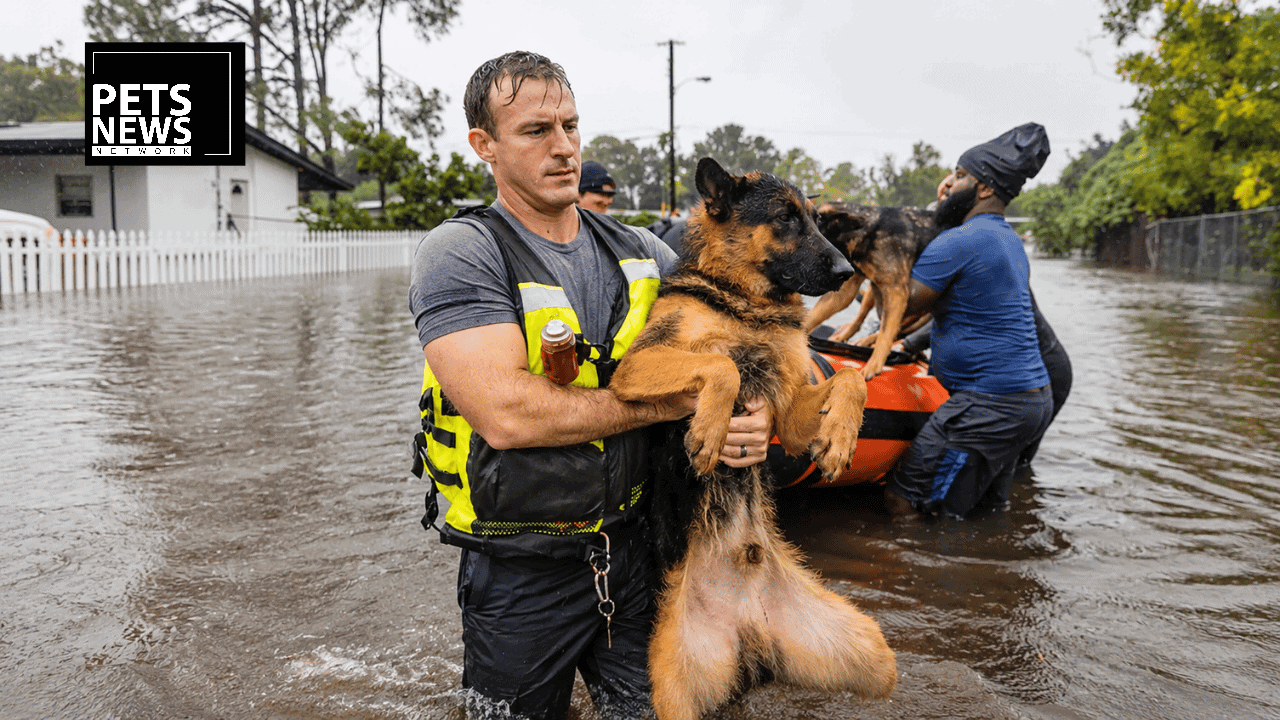

A Florida flood pet rescue this week began with residents posting calls for help online. By the time it ended, wildlife officers had moved more than 90 people and dozens of pets out of a flooded apartment complex in the city of Hollywood, after about fourteen inches of rain fell in roughly two days. Among those brought out were an infant who had stopped breathing and a disabled veteran whose wheelchair had been swept away. No deaths were reported. The rescue also shows, in a small way, what makes the difference for animals when water rises fast.
What happened
| Detail | What is reported |
|---|---|
| Where | An apartment complex on Emerald Pointe Drive, Hollywood, Broward County, South Florida |
| When | Wednesday, 18 November 2026 |
| Cause | Repeated heavy downpours. Hollywood recorded 13.28 inches of rain by Wednesday morning and 14.23 inches by Thursday morning |
| Conditions | Water filled ground-floor apartments overnight and surrounded parked vehicles. By Wednesday evening the road was listed as impassable even to high-water vehicles |
| Who responded | Officers of the Florida Fish and Wildlife Conservation Commission (FWC) |
| Rescued | More than 90 residents and dozens of pets |
| Deaths | None reported |
An earlier count put the number of residents at more than 70; the later figure is more than 90.

How the rescue unfolded
The officers involved normally patrol waterways and wild land. They have boats, high-clearance vehicles and training for water, which helps explain how they reached a place that ordinary vehicles could not.
They went in after residents of Broward County posted appeals for help on social media. Captain Jeff Carroll of the FWC found several families who needed to be evacuated, called for more units, and spent hours moving people to safety.
Two rescues stood out.
An infant who had stopped breathing. First responders trying to reach the child had themselves become stuck in floodwater. An officer got the infant to emergency medical staff, and the child recovered, according to the agency.
A disabled veteran. Floodwater had carried off his wheelchair, leaving him unable to get out. He was taken to a shelter for the night, and the wheelchair was later recovered.
One resident described her shoes floating around the apartment. Another said her first car had been ruined by the water.

The animals
The reports say dozens of pets were brought out with their owners. No firm count or breakdown has been given. Two cats, Rem and Luna, are mentioned by name; Luna was carried out in a carrier through thigh-high water.
Where the animals went afterwards, and whether emergency shelters accepted them, has not been reported.
What can be said is this: the pets came out because their owners brought them and the rescuers took them. In a flood, that is not automatic. A frightened cat hides. A dog without a lead is hard to hand into a boat. An officer with limited room has to decide what else can come.

A wider emergency
The apartment complex was one scene in a much larger event. Flooding closed highways and schools across South Florida, and a flood watch remained in force with more rain forecast. Further north, in Brevard County, rescues and welfare checks were continuing days later.
In conditions like these, rescuers are stretched thin. The households that fare best, and whose animals fare best, are usually the ones that were ready to leave.
Why people stay, and why that matters
After past disasters, one finding has come up again and again: many people refuse to evacuate because they will not leave a pet. Some die as a result.
That experience is the reason emergency planning in the United States now has to take household pets into account, under a law passed after Hurricane Katrina. Other places have moved the same way, including Tokyo-area governments working to keep pets and owners together in disaster shelters. Therefore the practical advice to every pet owner is the same: plan to take the animal with you, and make that possible in advance.
A flood kit for a pet
Keep it in one bag, near the door, and check it twice a year.
- Food and water for several days, with a bowl. Tinned food needs a ring-pull or an opener
- Medicines, with a note of doses, and at least a week’s supply of anything essential
- A carrier for each cat or small dog, labelled with your name and number
- A lead and a well-fitting harness or collar for each dog, plus a spare
- Vaccination and medical records, as paper copies in a sealed bag and as photos on your phone
- A recent photo of you with your pet, which is quick proof of ownership if you are separated
- Identification: a tag on the collar, and a microchip registered to your current phone number
- Waste bags, a small litter tray and litter, and a few puppy pads
- A towel and a familiar blanket
- A basic first aid kit
- Your vet’s number, and the number of a friend or relative outside the area who could take the animal
If you have to leave
- Go early. Leaving before the water arrives is safer for everyone, and it is when you have the widest choice of where to go with an animal.
- Bring pets inside at the first warning, so that you are not searching for a hiding cat with water at the door.
- Put cats in carriers and dogs on leads before you open the door. A frightened animal may bolt.
- Never leave a pet tied up or shut in a cage if you are forced to go without it. An animal that cannot move cannot save itself, as a Delhi house fire that killed a tethered dog showed.
- If you truly cannot take a pet, leave it loose indoors on an upper floor with food and plenty of water, and put a notice on the door saying what animals are inside and how to reach you.
- Tell rescuers at once how many animals you have and what kind.
- Do not go back for a pet through moving water. Tell the emergency services where it is.
Know where you would go
- Find out now which local shelters accept pets. Many emergency shelters do not, or take them only in carriers with proof of vaccination.
- Make a list of pet-friendly hotels and boarding kennels on your likely route out.
- Agree a plan with a friend or relative on higher ground who would take you and your animals.
- Arrange a neighbour who can collect your pet if a flood comes while you are at work.
Floodwater is not clean water
Even a pet that gets out safely can be made ill by the flood itself.
- Do not let animals drink floodwater. It can carry sewage, fuel and chemicals.
- Rinse and dry a pet that has waded or swum, and wash your own hands afterwards.
- Check paws and skin for cuts, which infect easily after contact with dirty water.
- Watch for snakes and other displaced wildlife, and for fallen power lines.
- Keep pets on a lead when you return home. Fences may be down, familiar scents are gone, and animals can become lost in their own street.
- See a vet if a pet vomits, has diarrhoea, stops eating or seems unusually tired in the days that follow.
Where this stands
- More than 90 residents and dozens of pets were evacuated from the complex on 18 November.
- An infant and a disabled veteran were among those brought to safety.
- No deaths have been reported from this rescue.
- Rescues and welfare checks were continuing in other parts of Florida.
Rain of this kind gives very little warning. A carrier by the door and a bag already packed are what turn a pet from something a rescuer has to go back for into something that leaves with the family.
Pets News Network is India’s first dedicated media platform for the pet and animal industry. The guidance here is general safety information, not veterinary advice. For breaking global pet news, brand coverage, and advertising enquiries, contact: info@petsnewsnetwork.com