


Nestlé Purina PetCare has announced a significant new investment in Southeast Asia, committing CHF 157 million (approximately $194.2 million USD) to expand its pet food manufacturing facility in Rayong, Thailand. The move is a direct response to surging demand for pet nutrition across Asia, Oceania, and Africa, a region the company has increasingly positioned as central to its global growth strategy.
The expansion targets an existing facility rather than an entirely new build, the Rayong site originally opened in 2022, meaning this investment effectively scales up capacity at a plant still in its relatively early years of operation, a signal of just how quickly demand in the region has outpaced initial projections.
What the Investment Actually Covers
The expanded Rayong facility will increase production across four of Purina’s most recognisable brands: Felix, Friskies, Pro Plan, and Purina ONE. These brands span both the everyday and premium ends of the pet food market, suggesting the expansion isn’t narrowly focused on a single product tier but rather aims to scale up Purina’s broader portfolio to meet demand across different consumer segments simultaneously.
Production from the expanded facility will serve both the domestic Thai market and international customers across the wider region, positioning Rayong as an increasingly important export hub within Purina’s global manufacturing network, not simply a facility built to serve local demand alone.
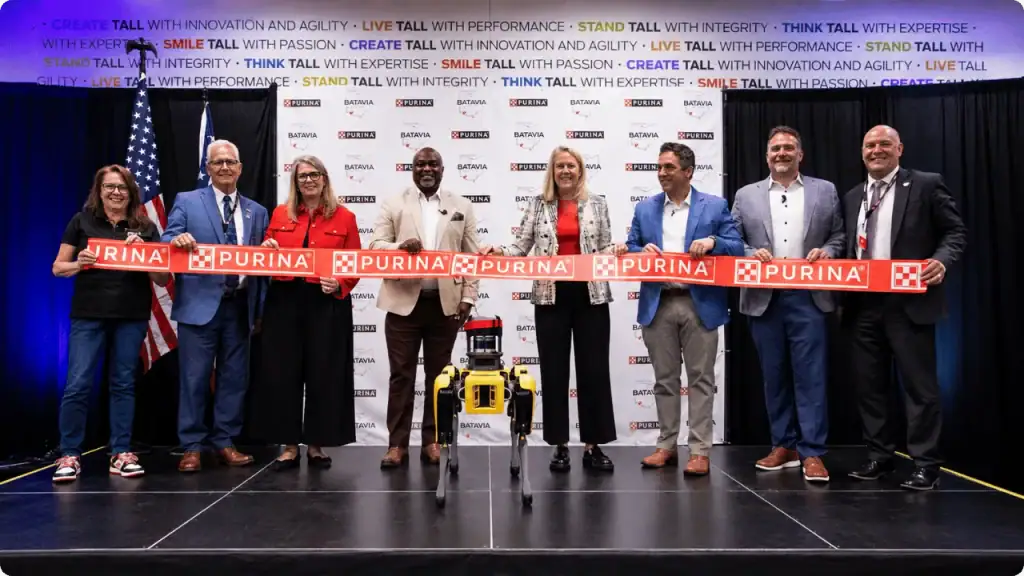
A Genuine Commitment to Local Sourcing
One detail that stands out in Nestlé’s announcement is the emphasis placed on local ingredient sourcing. The expanded production will use a high proportion of locally sourced raw materials, including poultry, fish, and vegetables, a commitment the company says will support Thai suppliers and contribute directly to local economic value creation.
This isn’t purely a goodwill gesture. Sourcing key ingredients like poultry and fish locally in Thailand, a country with substantial existing agricultural and fisheries industries, likely offers genuine supply chain efficiency benefits alongside the stated economic development angle, shorter supply chains, reduced import dependency, and closer quality control over key raw materials feeding into the expanded production line.
The Market Forces Driving This Decision
Nestlé’s rationale for the investment rests on some genuinely striking regional numbers. The Asia, Oceania, and Africa (AOA) region is now home to more than 350 million domestic cats and dogs, a pet population large enough to make it one of the most consequential growth markets for any major global pet food manufacturer.
Three specific trends are cited as driving this growth. First, pet humanization, the increasing tendency for pet owners across the region to treat their animals as genuine family members rather than purely utilitarian companions. Second, a broader shift away from homemade pet meals toward packaged, commercially produced nutrition, a transition that mirrors trends already well established in North American and European pet food markets years earlier. Third, rising demand specifically for functional and specialised health-focused pet products, reflecting a more sophisticated, health-conscious pet ownership culture taking hold across the region.
What Purina’s Leadership Had to Say
Hubert Wieser, CEO of Nestlé Purina PetCare AOA, framed the investment within this broader cultural shift: he noted that the health and wellbeing trend increasingly extending to pets as family members is driving genuine demand for specialised nutrition products designed to enhance both longevity and quality of life, rather than simply providing basic sustenance.
Remy Ejel, CEO of Nestlé Zone AOA, placed the investment within Nestlé’s wider corporate strategy. “Pet food is one of Nestlé’s most dynamic segments globally, accounting for around 21% of Group sales. This investment reflects our confidence in its long-term potential across Asia, Oceania and Africa as well as the rest of the world,” Ejel said. He added: “Thailand is an important part of Purina’s global manufacturing network, and this expansion will enhance our ability to serve more pet owners with superior nutrition.”
That 21% figure is worth sitting with for a moment. Pet food isn’t a peripheral category for Nestlé, one of the largest food and beverage companies in the world, it’s a substantial, dedicated pillar of the company’s overall global sales, which explains why continued, aggressive capacity investment in high-growth regions like AOA makes strategic sense at the corporate level.
Part of a Much Bigger Global Investment Pattern
The Thailand expansion doesn’t exist in isolation. It’s the latest in a string of major manufacturing investments Nestlé has made in its pet food division over recent months, each targeting a different strategic region.
The company previously committed CHF 520 million (roughly $643.1 million USD) to a new pet food production and logistics platform in Mantova, Italy, a facility expected to begin operations in 2029. Separately, Nestlé invested $550 million in a new Purina factory in Ohio, in the United States, and committed BRL 2.5 billion to a new wet pet food production facility in Brazil.
Taken together, these investments, spanning Europe, North America, South America, and now expanded capacity in Southeast Asia, paint a picture of a company treating pet food not as a single global product line to be managed centrally, but as a genuinely regional business requiring dedicated, localised manufacturing infrastructure in each of its key growth markets.

The Timing Fits a Broader Growth Story
This Thailand announcement also landed alongside other signals of strong underlying performance in Nestlé’s pet care business. At a recent Barclays conference presentation, the company highlighted organic growth of 2.8% in its most recent quarter, driven by continued strength in cat food sales and improving performance in dog food specifically. Executives also noted that while some temporary US retailer inventory reductions had affected reported growth figures, underlying consumer purchasing trends across both cat and dog food categories continued to strengthen.
That context matters. A major capacity investment announced during a period of confirmed, ongoing category strength suggests this is a proactive scaling decision rather than a reactive one, Nestlé appears to be building capacity ahead of anticipated demand, rather than scrambling to catch up with growth that has already outpaced its existing manufacturing footprint.
Thailand’s Growing Role Beyond Pet Food
Interestingly, this pet food investment isn’t the only major manufacturing commitment Nestlé has planned for Thailand. The company has also signalled plans to build a new, high-tech production and distribution hub for Nescafé in the country, suggesting Thailand is emerging as a broader strategic manufacturing base for Nestlé across multiple product categories, not solely pet food.
That dual investment, in both pet nutrition and coffee production, within the same country and around the same timeframe, reinforces Thailand’s growing importance within Nestlé’s overall Asian manufacturing strategy, likely reflecting a combination of favourable manufacturing costs, established logistics infrastructure, and Thailand’s central geographic position for serving both domestic Southeast Asian markets and broader export destinations.
Why This Matters for the Broader Pet Industry
For an industry watching how global pet food giants allocate capital, Nestlé’s Thailand expansion offers a clear signal about where the company sees its strongest future growth: not in mature Western markets alone, but increasingly in the rapidly expanding pet ownership base across Asia, Oceania, and Africa. With a combined pet population exceeding 350 million animals and cultural trends around pet humanization still very much in their earlier growth phase compared to markets like the US or UK, the AOA region represents exactly the kind of long-runway opportunity that justifies this scale of manufacturing commitment.
As construction and capacity upgrades proceed at the Rayong facility, the practical result for pet owners across Asia should be more consistent access to Purina’s range of everyday and premium nutrition products, backed by a supply chain increasingly rooted in local Thai sourcing rather than dependent entirely on imported ingredients or products manufactured on the other side of the world.
Related News To Read :- https://petsnewsnetwork.com/nestle-just-committed-chf-520-million-to-pet-food-and-it-tells-you-everything-about-where-the-global-pet-industry-is-going/
Pets News Network is India’s first dedicated media platform for the pet and animal industry. For breaking global pet news, brand coverage, and advertising enquiries, contact: info@petsnewsnetwork.com