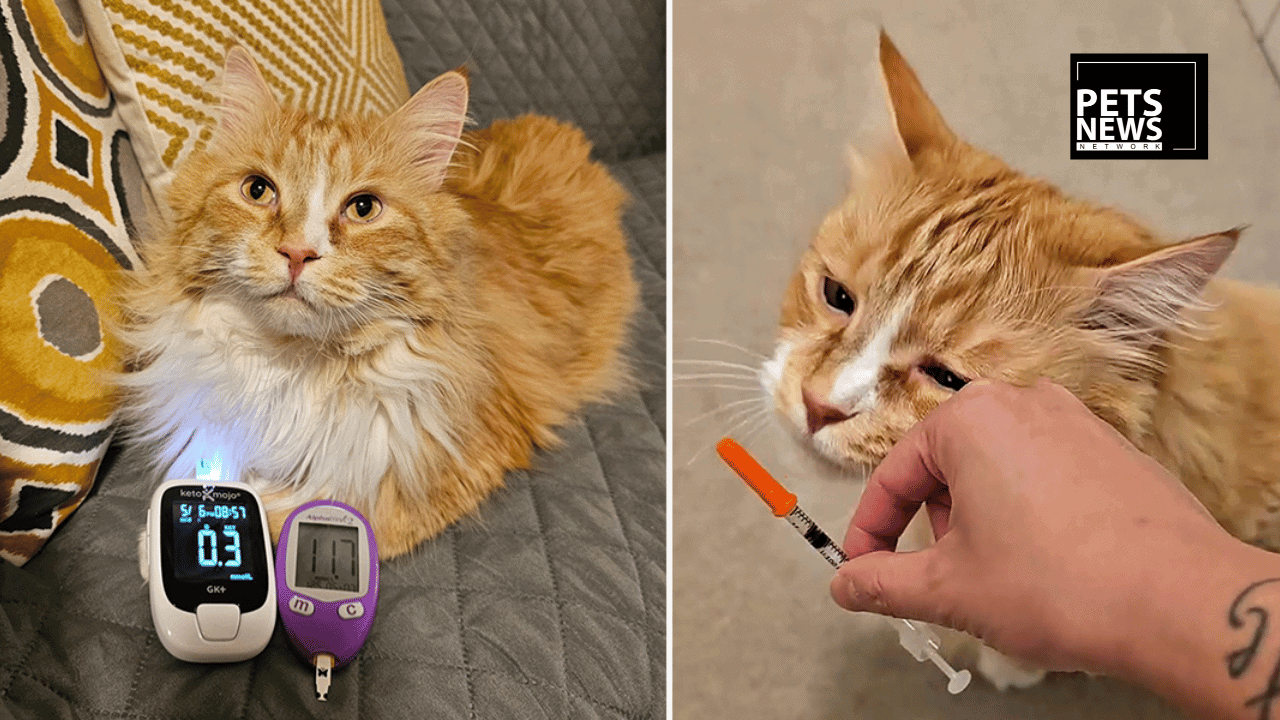

For many cat owners, a diabetes diagnosis comes with a fairly predictable treatment path: insulin, dietary adjustments, and regular monitoring, followed by reasonably stable blood sugar control over time. But for a meaningful subset of diabetic cats, that predictable path never quite materialises. Insulin doses climb higher and higher, sometimes to genuinely extreme levels, and the cat’s blood sugar simply refuses to stabilise no matter how carefully the treatment is managed.
In cases like this, veterinarians increasingly look for a hidden cause lurking behind the diabetes itself: acromegaly, also known as hypersomatotropism, a condition caused by chronic excess secretion of growth hormone, most commonly the result of a tumour on the pituitary gland.
What Acromegaly Actually Is
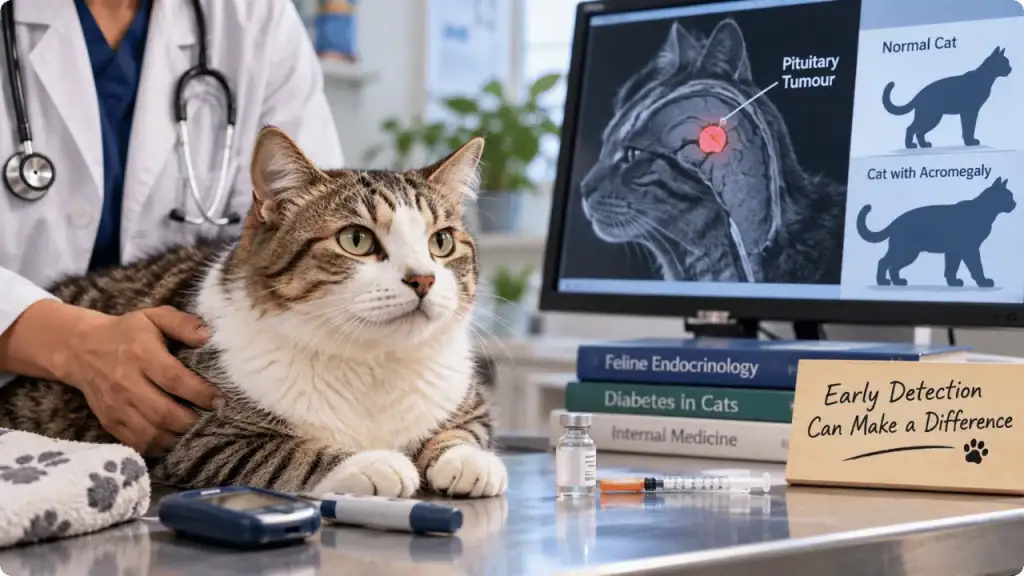
Acromegaly develops when the body produces far more growth hormone than it should, almost always due to a growth hormone-secreting tumour on the anterior pituitary gland, a small but critically important gland located at the base of the brain. In cats, these tumours are typically slow-growing and benign, but they can be present for a long time before any clinical signs become obvious enough to prompt investigation.
That slow, quiet progression is part of what makes acromegaly such a diagnostic challenge. By the time visible symptoms emerge, the underlying tumour may have already been influencing the cat’s metabolism for months or even years.
Why Diabetes Is Usually the First Clue
Here’s the detail that makes acromegaly such a tricky condition to catch early: in most cats, the very first noticeable sign isn’t any dramatic physical change at all, it’s diabetes mellitus that simply won’t respond properly to standard treatment.
Excess growth hormone has a direct, powerful effect on insulin sensitivity, essentially working against insulin’s normal function in the body. This creates severe insulin resistance, meaning a cat with acromegaly-driven diabetes often needs substantially higher insulin doses than a typical diabetic cat to achieve any meaningful blood sugar control. Some published case series have documented affected cats requiring an average of 7 international units of insulin twice daily, with some individual cats needing as much as 35 units twice daily, doses far beyond what most diabetic cats would ever require.
For veterinarians, a diabetic cat that keeps needing higher and higher insulin doses without achieving stable control is one of the clearest warning signs that something more than straightforward diabetes may be at play.
The Physical Changes to Watch For
While insulin resistance is typically the earliest sign, acromegaly does eventually produce visible physical changes as the condition progresses, changes directly caused by growth hormone’s influence on bone, cartilage, and soft tissue growth throughout the body.
Affected cats commonly show enlargement of the extremities, including the paws, along with broadening of the skull and jaw, and enlargement of internal organs, including the heart and kidneys. Facial features can shift subtly over time as bone and soft tissue growth continues under sustained hormone excess. Owners sometimes notice their cat’s face looking somehow different, broader or coarser, without immediately connecting it to anything medically significant.
As the condition advances further, more serious complications can develop. Cardiomegaly, an enlarged heart, and azotemia, a buildup of waste products in the blood reflecting declining kidney function, tend to appear later in the disease course, underscoring why earlier detection and intervention genuinely matters for long-term outcomes.
Why This Condition Is Genuinely Common in Cats
Acromegaly isn’t some vanishingly rare curiosity in feline medicine. Research has found that growth hormone-secreting pituitary tumours occur in domestic cats at a rate roughly ten times higher than in humans. One large study screening diabetic cats specifically found that 26.1% showed elevated levels of insulin-like growth factor-1 (IGF-1), a key marker associated with acromegaly, and among a subset who underwent further pituitary imaging, 89% were confirmed to have an actual pituitary tumour.
That’s a striking statistic. It suggests that a meaningful proportion of cats currently being treated simply as “difficult to control diabetics” may actually be dealing with an underlying acromegaly diagnosis that has never been formally investigated or confirmed.
How Veterinarians Actually Diagnose It
Diagnosing acromegaly isn’t straightforward, there’s no single, universally definitive blood test that confirms the condition on its own. Instead, veterinarians typically build a diagnosis through a combination of approaches: a thorough physical examination and medical history, bloodwork and urinalysis to assess overall health and rule out other conditions, and specific testing for elevated IGF-1 levels, which serves as a useful, though imperfect, screening marker.
The most definitive diagnostic tool available is imaging of the pituitary gland itself, typically via CT scan or MRI, which can directly visualise a pituitary mass in most affected cats. It’s worth noting, however, that around 10% of confirmed acromegaly cases show no visible pituitary tumour on imaging, meaning a clean scan doesn’t entirely rule out the condition in a cat with otherwise strongly suggestive clinical signs.
Because insulin resistance can stem from several other conditions, including hyperthyroidism, hyperadrenocorticism (Cushing’s disease), and other less common causes, ruling out these alternative explanations is a necessary part of reaching a confident acromegaly diagnosis.
What Treatment Actually Looks Like
Managing acromegaly in cats generally involves addressing two things simultaneously: the excess growth hormone itself, and the severe insulin resistance it causes.
High-dose insulin therapy remains a core part of managing affected cats’ diabetes throughout treatment, regardless of which other approach is pursued, since blood sugar control needs ongoing attention even while more targeted treatment takes effect.
Radiation therapy is currently considered the most effective treatment option for the underlying pituitary tumour in most cases. Newer approaches like stereotactic radiation therapy (sometimes referred to as SRT, SRS, or Cyberknife-type treatment) can often be completed in a single treatment session, a meaningful improvement over older fractionated radiation protocols that traditionally required 15 to 20 daily treatments. Radiation’s primary goal is reducing the tumour’s hormone output to a clinically manageable level, though it’s worth noting radiation tends to be better at shrinking tumour size than fully normalising hormone secretion, and can take three or more years to achieve its full effect.
Hypophysectomy, surgical removal of the pituitary gland, offers another option where available, and can produce a relatively rapid drop in hormone levels and remission of clinical signs. However, this procedure carries its own risks, including transient diabetes insipidus following surgery, and isn’t widely available at all veterinary facilities.
Medical therapy, including dopamine agonists and somatostatin analogues used in human acromegaly treatment, has shown more mixed results in cats. Some newer somatostatin analogues, such as pasireotide, have demonstrated genuine success in feline patients, while older options like octreotide have generally proven less effective, likely due to species-specific differences in how feline pituitary tumours express hormone receptors.
The Honest Prognosis
Short-term prognosis with appropriate treatment is generally fair to good, meaning many cats can achieve meaningfully improved quality of life and better diabetic control once acromegaly is properly identified and addressed. Long-term prognosis, however, tends to be more guarded, with many affected cats eventually succumbing to organ complications, most often congestive heart failure, as the disease’s cumulative effects on the cardiovascular system progress over time.
When to Ask Your Vet About Acromegaly
Given how often acromegaly hides behind a diabetes diagnosis, there are a few specific situations where raising the possibility with your veterinarian is genuinely worthwhile: a diabetic cat needing unusually high or steadily escalating insulin doses without achieving stable control, any noticeable broadening of the face, jaw, or paws in a middle-aged or older cat, or diabetes that develops alongside other unexplained physical changes.
None of this means every diabetic cat has a hidden pituitary tumour, most don’t. But for the specific subset of cats whose diabetes simply won’t behave the way it should despite consistent, well-managed treatment, acromegaly deserves to be part of the conversation, precisely because catching it earlier gives both the cat and the veterinary team a genuinely better chance at managing the condition before more serious organ complications take hold.
Editorial note : These conditions are rare, and many of their symptoms can also occur with more common illnesses. This article is intended for awareness, not self-diagnosis. If your cat or dog shows persistent, unusual, painful, or rapidly worsening symptoms, consult a qualified veterinarian.
Pets News Network is India’s first dedicated media platform for the pet and animal industry. For breaking global pet news, brand coverage, and advertising enquiries, contact: info@petsnewsnetwork.com