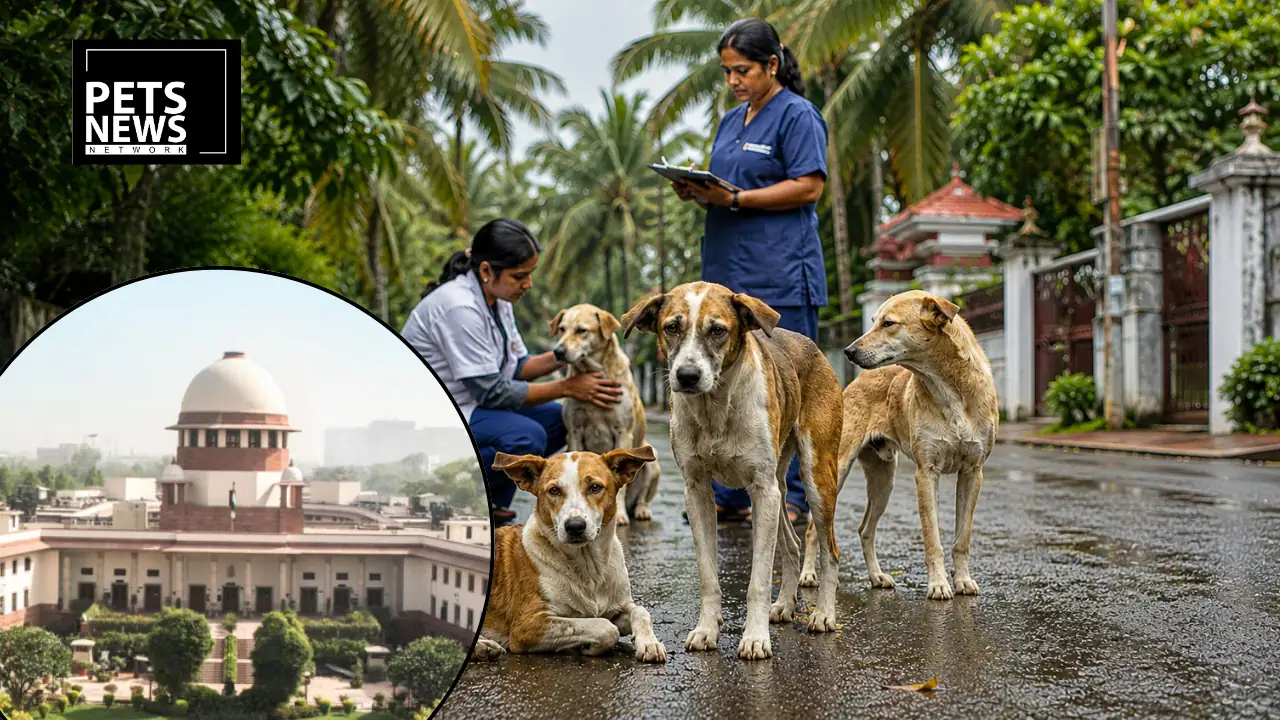

Kerala has formally approved a detailed Standard Operating Procedure (SOP) governing the euthanasia of stray dogs under specific, tightly defined circumstances, a policy shaped directly by Supreme Court guidelines and arriving amid sustained public concern over rising stray dog attacks across the state.
Unlike a blanket policy toward stray dog management, the SOP is narrowly scoped and procedurally dense, permitting euthanasia only for dogs that are rabid, incurably ill, mortally wounded, or demonstrably violent and ferocious, while building in multiple layers of oversight, documentation, and even a window for animal welfare intervention before any euthanasia decision becomes final.
Who Actually Makes the Decision
At the centre of the entire framework sits a newly mandated institutional structure: every local self-government body in Kerala is now required to form a Stray Dog Management Committee (SDMC) to oversee the process from start to finish.
The composition of this committee is deliberately multi-disciplinary rather than left to a single official’s discretion. The head of the local body serves as chairperson, with committee membership drawn from veterinary officers, Animal Birth Control (ABC) project leads, medical officers, and representatives of the State Animal Welfare Board. That combination is meant to ensure that any euthanasia recommendation reflects genuine veterinary and public health judgment, rather than a purely administrative or reactive decision made under public pressure following an attack.
The Strict Rules Governing How Euthanasia Must Be Carried Out
Perhaps the most detailed portion of the SOP concerns exactly how euthanasia must be performed, if it’s authorised at all, leaving very little room for procedural deviation.
Euthanasia can only be carried out by a qualified veterinary surgeon, and only following a written recommendation from the SDMC itself, removing any possibility of the procedure being authorised informally or by a single individual acting alone. The SOP explicitly prohibits conducting euthanasia in the presence of other dogs, a provision aimed at minimising distress to other animals housed nearby.
On the method itself, the SOP is unambiguous: it strictly mandates intravenous administration of only two approved drugs, sodium pentobarbital or thiopental sodium. Mechanical methods or the use of painful chemicals are explicitly and strictly banned under the policy, a clear attempt to ensure that wherever euthanasia is authorised, it’s carried out through internationally recognised humane veterinary standards rather than any improvised or less controlled method.
A Built-In Window for Second Chances
One of the more notable aspects of Kerala’s SOP is that identifying a dog for euthanasia doesn’t mean the process happens immediately. Captured dogs flagged for euthanasia must first be kept in isolation kennels or ABC shelters for an observation period of 2 to 3 days, a window that serves two distinct purposes.
First, it allows for continued veterinary observation to confirm the dog’s condition genuinely meets the SOP’s criteria, rabid, incurably ill, mortally wounded, or demonstrably violent, rather than relying solely on an initial field assessment. Second, and perhaps more significantly from an animal welfare standpoint, details of these dogs must be published publicly on local body notice boards during this window, giving recognised animal welfare organisations or individuals the explicit option to adopt and take full custody of the dog before any euthanasia decision is finalised.
This built-in transparency and adoption pathway effectively means euthanasia functions as a last-resort outcome, applied only when no alternative custody arrangement emerges during the observation period, rather than an automatic or default response to any dog flagged as dangerous or ill.
Documentation, Accountability, and Legal Protection
The SOP places significant emphasis on record-keeping and institutional accountability throughout the process. Local bodies are required to maintain an exclusive register recording detailed information for every case, including the dog’s capture location, a photo or ID tag, and the specific reason euthanasia was deemed necessary.
That level of documentation serves a dual purpose: it creates a verifiable audit trail for each individual case, and it allows for pattern monitoring over time, helping identify whether certain areas or circumstances are producing a disproportionate number of euthanasia cases, which could in turn inform broader public health or animal management interventions.
The SOP also addresses a concern that has historically made officials hesitant to act in ambiguous situations: legal exposure. Officials carrying out duties under this SOP receive explicit legal protection from criminal cases or coercive proceedings, provided they’re following the established protocol correctly. This protection is likely intended to ensure that veterinary and civic officials aren’t deterred from acting on genuinely necessary cases out of fear of personal legal liability, while the strict procedural requirements simultaneously guard against misuse or overreach.
Financially, all expenses associated with the process are borne by local bodies, with spending subject to monthly audits by the State ABC Implementation and Monitoring Committee, adding a further layer of financial accountability to the framework.
The Broader Debate This Policy Sits Within
Kerala’s SOP arrives against the backdrop of a genuinely difficult, emotionally charged national conversation about how India should manage its stray dog population, one that involves real tension between public safety concerns and animal welfare principles.
Supporters of measures like this SOP point to the real, sometimes severe, harm caused by rabid or aggressive stray dogs, arguing that a carefully regulated, humane euthanasia pathway for animals that genuinely pose an ongoing danger, and for whom recovery isn’t medically viable, represents a responsible middle ground between inaction and indiscriminate culling. They emphasise that the SOP’s strict criteria, oversight committee, adoption window, and legally mandated humane methods are specifically designed to prevent the kind of arbitrary or excessive euthanasia decisions that animal welfare advocates have historically opposed.
Critics and animal welfare advocates, on the other hand, often argue that any euthanasia policy, however tightly regulated, risks being applied inconsistently on the ground, particularly in a system managing thousands of stray dog cases across numerous local bodies with varying levels of resources and veterinary capacity. Some worry that the definition of “demonstrably violent or ferocious” could be interpreted too broadly in individual cases, or that the observation and adoption window, while well-intentioned, may not always function as effectively in practice as it does on paper, particularly in areas with fewer active animal welfare organisations able to intervene within the 2-to-3-day window.
Why This Policy Matters Beyond Kerala
Kerala’s approach offers a detailed, closely watched template for how Indian states might attempt to reconcile Supreme Court guidance on stray dog management with the genuine, competing pressures of public safety and animal welfare. The SOP’s emphasis on committee-based decision-making, mandatory humane methods, public transparency, and a formal adoption window represents one of the more procedurally rigorous frameworks introduced by any state on this specific issue to date.
Whether the policy achieves its intended balance, protecting communities from genuine, verified threats while minimising unnecessary euthanasia through its built-in safeguards, will likely become clearer only as local bodies across Kerala begin implementing it in practice, and as its outcomes draw scrutiny from both public safety advocates and animal welfare organisations watching closely to see how the framework performs on the ground.
Pets News Network is India’s first dedicated media platform for the pet and animal industry. For breaking global pet news, brand coverage, and advertising enquiries, contact: ankur@petsnewsnetwork.com