


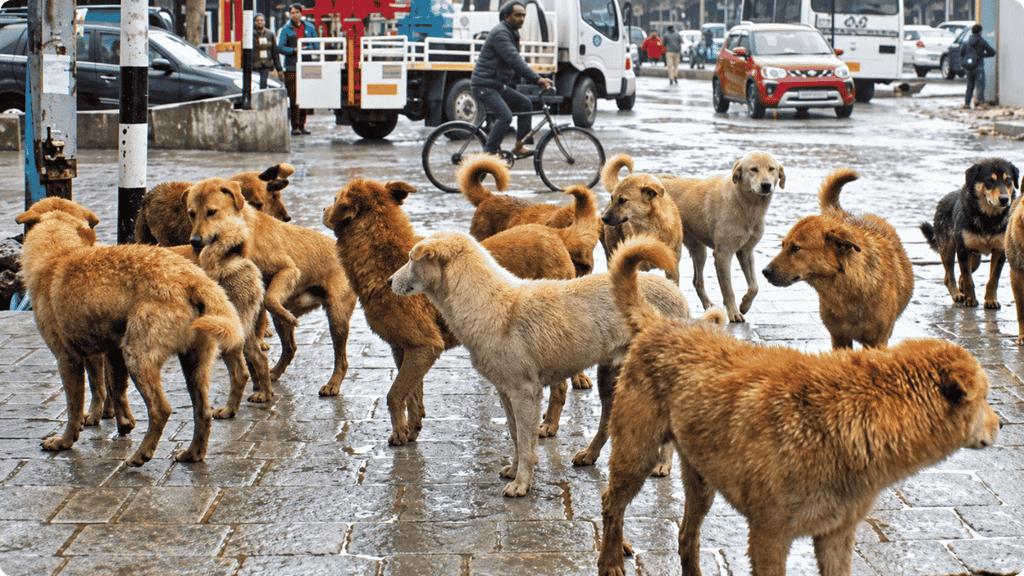
An RTI disclosure reveals Srinagar spent over a crore on sterilising strays, yet dog-bite cases crossed 25,000 in just two years. Here’s what the numbers actually show, and what they don’t.
₹1.48 crore. Spent over seven years. On sterilising the stray dogs sharing Srinagar’s streets with its residents. On paper, that’s a serious, sustained civic commitment. But when an RTI disclosure recently revealed this exact figure, filed by journalist Mukeet Akmali and reported from Srinagar, it didn’t read as a success story. It read as a question mark.
Because in that same window, Srinagar recorded more than 25,000 dog-bite cases across just two years, 2024 and 2025 combined. And that’s the tension at the heart of this story: a city that has been actively, continuously investing in stray population control, still facing a bite-case surge serious enough to trigger public concern and legislative scrutiny.
So what’s actually happening here? Is the sterilisation programme failing, or is the problem bigger than any single programme can solve? The numbers, once you sit with them, tell a more nuanced story than either extreme.
The Numbers, Laid Out Plainly
Here’s what the RTI response and related government data actually show:
- ₹1.48 crore (₹1,48,13,249) spent by the Srinagar Municipal Corporation (SMC) on dog sterilisation/castration between 2019 and December 2025
- That works out to roughly ₹21.16 lakh a year, or about ₹1.76 lakh a month, a modest sum for a city-wide animal population control programme
- 64,416 stray dogs estimated within SMC’s municipal limits, per a scientific population survey conducted in 2023
- 21,600 dogs sterilised between June 2023 and September 2025, according to figures placed before the Jammu and Kashmir Legislative Assembly
- 12,557 dog-bite cases in 2024 and 12,592 in 2025, adding up to 25,149 total reported cases over the two-year period
- At the broader Jammu and Kashmir level, more than two lakh dog-bite cases were reported during the same period
- A separate dataset from the Anti-Rabies Clinic at SMHS Hospital recorded 12,833 animal-bite and exposure cases between June 2024 and May 2025, including 6,258 dog-bite cases specifically
Even accounting for the fact that these datasets use different reporting periods and definitions (a point officials have specifically flagged), the overall picture is consistent: a genuinely large number of bite cases, running alongside years of sustained sterilisation spending.
Why Sterilisation Alone Isn’t a Quick Fix
It’s tempting to look at 21,600 sterilised dogs against a 64,416-dog population estimate and conclude the programme simply hasn’t covered enough ground yet. That’s part of the story, roughly a third of the estimated population has been sterilised so far, well short of the coverage threshold typically needed to meaningfully slow population growth.
But there’s a deeper structural issue the reporting highlights too: the sterilisation programme hasn’t run as one continuous, uninterrupted effort.
In 2025 specifically, the programme stalled for several months after a previous contract expired and a new one took time to finalise. It only resumed in August 2025, with SMC then setting a fresh target of sterilising over 21,000 dogs across 16 months, working out to roughly 1,350 dogs a month, or about 45 a day. By September 2025, teams were reportedly handling 40 to 50 sterilisations daily, having completed around 850 dogs in the programme’s first 25 days back in motion.
Here’s why that stop-start pattern matters so much: stray dog populations aren’t static. New dogs are born, some die, others move between areas, and previously sterilised animals can be difficult to track without consistent identification and record-keeping. Effective population control depends on sustained, continuous coverage across breeding cycles, not isolated sterilisation drives followed by long gaps. Every pause in the programme gives the population a window to partially rebound.
What SMC Has Actually Put in Place
To be fair to the civic body, the reporting also shows real operational effort behind the numbers, not just a budget line:
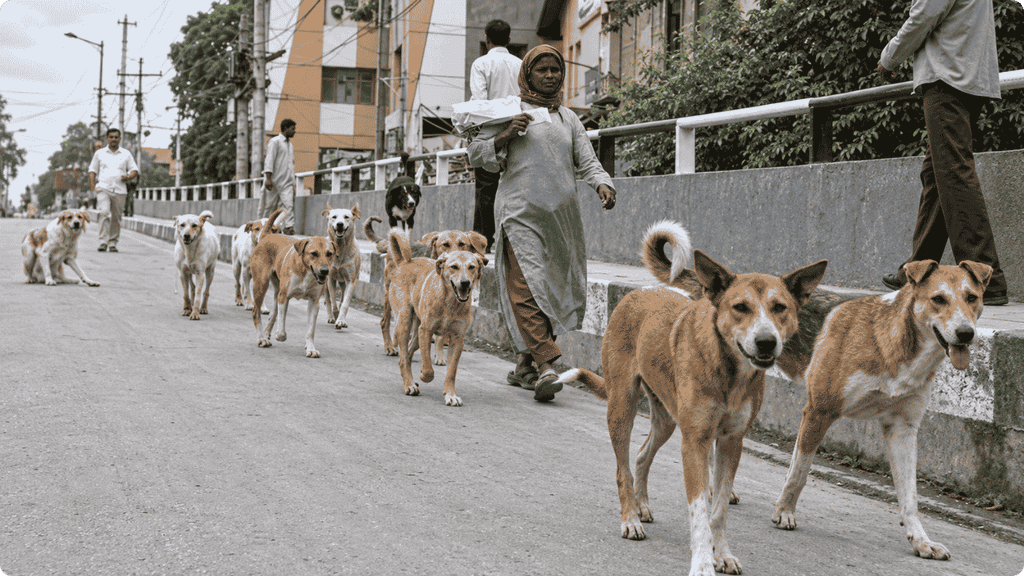
- Digital tracking mechanisms have been introduced to monitor dogs captured under the Animal Birth Control (ABC) programme, dogs are photographed and their capture locations recorded before and after sterilisation, then released back into the same areas
- The programme operates under the Animal Birth Control Rules, the legal framework requiring local authorities to carry out sterilisation and anti-rabies immunisation of street dogs, explicitly prioritising this approach over indiscriminate killing or relocation
- The stated objective is dual: preventing uncontrolled breeding while simultaneously ensuring anti-rabies vaccination coverage
This is, structurally, the right approach, it mirrors what courts and public health experts across India have consistently pushed for. The issue isn’t the framework. It’s whether the framework has been resourced and executed with enough consistency to actually bend the population curve.
The Real Question Buried in the RTI Data
Here’s the detail that makes this story worth paying attention to: the reporting is careful to note that the concern isn’t really about the ₹1.48 crore figure being too small or too large in isolation. At roughly ₹21 lakh a year, the spending is, by the report’s own framing, “relatively modest” given Srinagar’s size and estimated canine population.
The actual question is whether that funding and infrastructure have been sufficient to achieve real sterilisation and vaccination coverage, sustained over time, rather than whether any single year’s budget number looks impressive on paper.
That’s a more useful, more honest framing than either “the programme is failing” or “the programme just needs more money.” It points toward a specific, answerable question: has coverage been consistent enough, for long enough, to actually outpace the population’s natural growth? Based on the stalled months in 2025 alone, the honest answer right now appears to be: not yet.
What This Means for Pet Parents and Animal Welfare Advocates
For residents living alongside Srinagar’s street dogs, and for animal welfare advocates watching how the city manages this issue, a few practical takeaways emerge from this data:
- Consistency matters as much as total spending. A programme that pauses for months at a time loses ground it has to make up later, funding continuity deserves as much scrutiny as funding amount.
- Transparency is improving, and that’s genuinely good news. The fact that this data exists at all, and that digital tracking is now being used to monitor sterilised dogs, reflects a civic body that is at least building the infrastructure for accountability, even if execution still has real gaps.
- Bite-case numbers and sterilisation numbers aren’t directly comparable without care. Different datasets, different reporting periods, and different definitions mean raw comparisons can mislead as easily as they inform, a caution worth keeping in mind before drawing hard conclusions from any single statistic.
- This is a shared, long-term problem, not a one-programme fix. Rabies vaccination, consistent sterilisation coverage, public awareness around safe interaction with strays, and community-level cooperation with ABC teams all need to move together for numbers like the bite-case count to genuinely start falling.
For Srinagar’s residents, this isn’t an abstract policy debate, it’s about whether a walk to the market or a child playing outside carries real risk. The RTI disclosure doesn’t offer a clean answer to that. What it offers is a clearer, more honest picture of exactly where the gaps still are.
What Do You Think?
Should cities like Srinagar be required to guarantee uninterrupted sterilisation coverage, even if it means locking in multi-year contracts upfront? Or does the deeper fix lie elsewhere, in rabies vaccination, waste management, or public education? We’d love to hear your take in the comments.
Pets News Network is India’s first dedicated media platform for the pet and animal industry. For breaking global pet news, brand coverage, and advertising enquiries, contact: info@petsnewsnetwork.com