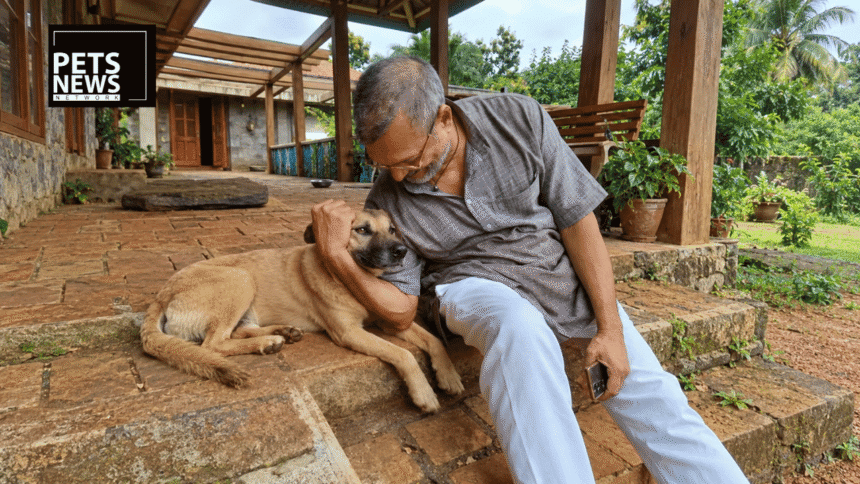


Bengaluru North Corporation is set to begin relocating stray dogs from institutional premises into newly constructed shelter facilities this week — one of the first visible outcomes of the Supreme Court’s landmark November 2025 directive on urban stray dog management.
On paper, it reads as progress. In practice, the questions it raises deserve to be asked loudly, clearly, and before the first dog is moved.
The Numbers First
Bengaluru’s five city corporations under the Greater Bengaluru Authority have been building shelter homes with a combined capacity of nearly 2,100 dogs. Of the 2,696 institutional stray dogs identified citywide so far, Bengaluru North alone accounts for 901 — the highest of any zone, ahead of West (591), Central (504), East (369), and South (331).
The Supreme Court’s November 7, 2025 order directed local bodies to identify strays within institutional premises — schools, colleges, hospitals, railway stations, sports complexes, and bus depots — and relocate them to designated shelters after sterilisation and vaccination. Critically, it ruled that dogs removed from these campuses cannot be released back to the same locations — a clear break from the Capture-Sterilise-Vaccinate-Release model that has governed India’s Animal Birth Control Rules since 2001.
Bengaluru North has interim capacity at observation centres in Dasarahalli and Yelahanka and a stopgap facility at Mavallipura. A permanent shelter is proposed at Ambedkar Nagar. Tenders have been floated for NGOs to manage day-to-day operations.
The infrastructure is being built. The tenders are going out. The dogs are being counted.
Now ask the questions.
Question 1: What Are the Standards These Shelters Must Meet — and Who Is Checking?
A shelter is only as good as what happens inside it. Before a single dog is relocated, the public and the animal welfare community deserve clear, published answers to basic questions:
What is the minimum square footage per dog? What ventilation standards apply? What veterinary care is mandatory and how frequently? What is the protocol when a dog falls sick? Who conducts inspections and how often? What happens when a shelter reaches capacity?
The Animal Welfare Board of India has published standards for animal shelters. Whether Bengaluru’s new facilities meet those standards — not just in blueprint, but in operational reality — needs to be confirmed publicly before intake begins, not after.
Sujaya Jagadish of the Society for Prevention of Cruelty to Animals has already raised this concern directly: overcrowded, poorly managed facilities risk triggering disease outbreaks that affect both the animals inside and the people around them. This is not a hypothetical. It is a documented pattern from animal shelter history across India.
Question 2: 2,100 Capacity. 2,696 Dogs Identified. What Happens to the Remaining 596?
The mathematics of this situation deserves attention. Bengaluru has built shelter capacity for approximately 2,100 dogs. It has already identified 2,696 institutional strays. That is a gap of nearly 600 dogs before the count of non-institutional strays is even considered.
What is the plan for those 596? Are additional facilities being built? Is capacity being expanded? Or will the shelter system hit its ceiling before the mandate is complete — leaving some dogs in limbo, neither returned to their territories nor housed in proper facilities?
This question needs an answer before the shelters open, not after they are full.
Question 3: These Dogs Have Territories, Bonds and Lives. What Happens to All of That?
Many of the dogs being relocated have lived in their institutional territories for years. They have established social hierarchies, behavioural patterns, and — in many cases — genuine relationships with staff, students, and community members who have been feeding and caring for them informally for a long time.
Sathwin Putta of South Bengaluru Cares has articulated this concern directly: a one-size-fits-all confinement approach risks penalising animals that have been peacefully coexisting with local communities, and could undo years of progress in humane stray management.
Confinement is genuinely stressful for dogs who have spent their entire lives as free-ranging animals. Stress compromises immunity. It changes behaviour. It can trigger aggression in dogs that were previously calm. What behavioural support, environmental enrichment, and acclimatisation protocols are built into these shelters to account for this transition?
A concrete kennel with food and water is not the same thing as a home. The difference matters — for the dogs and for the people running these facilities.
Question 4: Who Is Monitoring the NGOs Running These Shelters?
Civic authorities have floated tenders for NGOs to handle daily shelter operations — maintenance, administration, and animal care. This is the right instinct. Professional animal welfare organisations are better equipped to run shelters humanely than municipal staff without specialist training.
But the tender process and the monitoring framework need to be transparent. Which NGOs have been selected? What are the contractual welfare standards they must meet? What are the consequences if standards are not maintained? Who conducts surprise inspections? Who does a shelter dog’s advocate call if conditions deteriorate?
The accountability chain must be public and it must be real. Good intentions in a tender document do not protect animals if nobody is checking what happens six months after the contract is signed.
Question 5: Is There a Reunification or Adoption Pathway — or Is This Permanent Confinement?
The Supreme Court order mandates relocation. It does not mandate permanent confinement for life. But without a deliberate, resourced, and publicly committed adoption and community fostering programme, that is effectively what these shelters risk becoming — holding facilities for dogs who entered as strays and will leave only when they die.
Is there an adoption programme attached to these shelters? Is there a community fostering model? Are the NGOs being contracted required to actively facilitate rehoming? Is there a timeline after which a dog that has been sterilised, vaccinated, and assessed as non-aggressive can be placed in a foster home or community feeding zone?
These are not soft questions. They are the difference between a shelter system and a humane one.
What Bengaluru Gets Right — and What Still Needs Work
To be clear: the Supreme Court’s concern about public safety is legitimate. Between January and March 2026 alone, Bengaluru recorded 10,423 dog bite cases — 6,254 involving strays specifically. The pressure to act is real and the institutional zones identified for clearance — schools, hospitals, railway stations — are genuinely sensitive spaces.
The shelter-based approach, done well, is not the enemy of animal welfare. Done well, it is an improvement on the chaos of inadequate ABC implementation, under-resourced sterilisation programmes, and the invisibility of community dogs in institutional spaces.
Done badly — rushed, underfunded, over capacity, inspected irregularly, and run without genuine welfare standards — it is something else entirely.
Bengaluru North’s shelters open this week. The animal welfare community, the press, and every person in this city who has ever put a bowl of water out for a street dog should be watching what happens next — not with hostility, but with the kind of sustained, informed attention that is the only real protection these animals have.
They cannot speak for themselves. That is exactly why someone else has to.
Pets News Network is India’s first dedicated media platform for the pet and animal industry. For breaking global pet news, brand coverage, and advertising enquiries, contact: ankur@petsnewsnetwork.com