
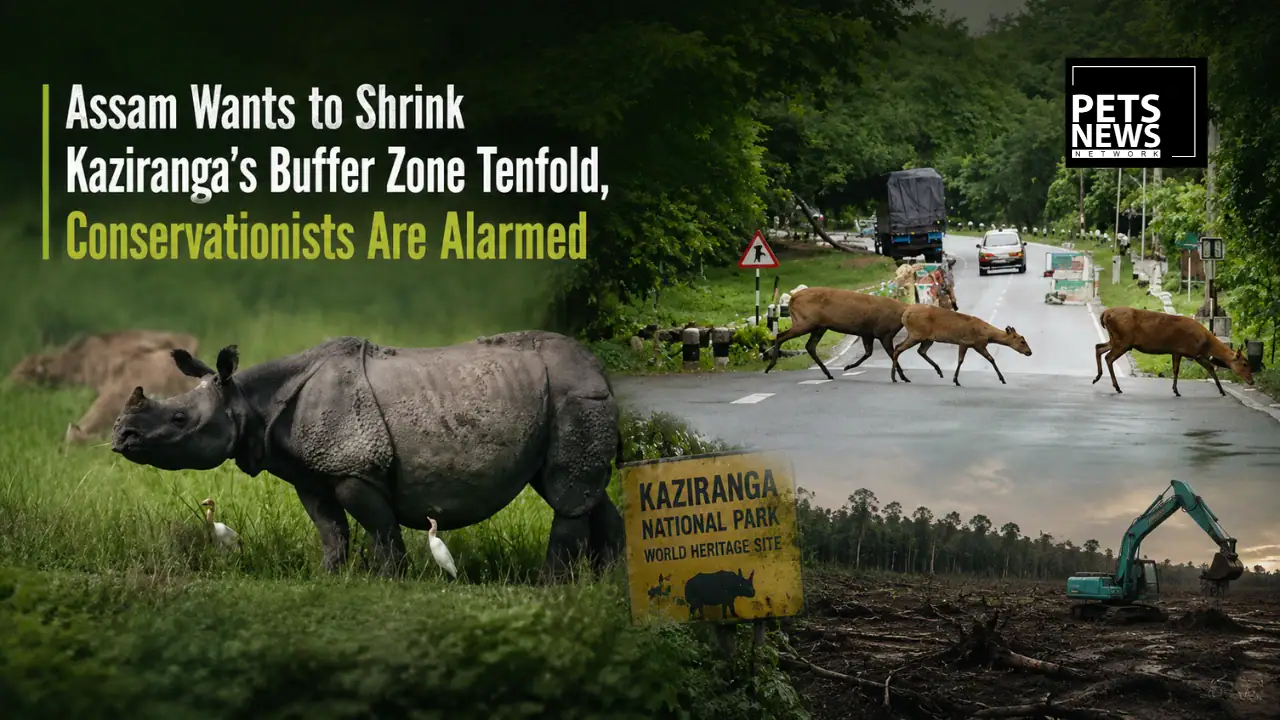

Assam is preparing to formally ask the Central Government to dramatically shrink the eco-sensitive zone (ESZ) surrounding Kaziranga National Park and Tiger Reserve (KNPTR), a buffer area currently set at a 10-kilometre radius under default national rules. Chief Minister Himanta Biswa Sarma announced on August 8 that the state intends to propose cutting that buffer down to just 1 kilometre, and to submit the formal request to the Centre within the next two months.
The announcement, made during a visit to Bokakhat, has triggered what several outlets have described as a fresh, intense debate over how much space should be allowed for development around one of India’s most ecologically significant protected landscapes.
Why the 10 km Zone Exists in the First Place
To understand the significance of this proposal, it helps to understand why Kaziranga currently operates under a 10-kilometre default buffer at all. Eco-sensitive zones are buffer areas notified around protected forests, national parks, and wildlife sanctuaries specifically to regulate activities that could adversely affect the surrounding ecology, functioning as a transition space between fully protected habitat and areas open to human activity and development.
Kaziranga, notably, has never actually had a final eco-sensitive zone formally notified. In the absence of that final notification, a 2022 Supreme Court order fixes the default ESZ at 10 kilometres, a rule that isn’t unique to Kaziranga but applies nationally wherever a state hasn’t completed the process of securing its own smaller, site-specific zone. The Gauhati High Court reaffirmed that this 10-km default remained operative as recently as March this year, noting that Assam had submitted neither a final notification nor even a draft ESZ proposal to the Centre up to that point.
The Government’s Reasoning
According to Chief Minister Sarma, the current 10-km buffer has effectively held back infrastructure and urban development plans in and around Bokakhat, including proposals for a modern stadium and broader civic infrastructure improvements in the area.
“Since Kaziranga has not yet been finally notified, the default eco-sensitive zone is 10 km. Once the notification is completed, we will propose a scientifically defined 1-km eco-sensitive zone,” Sarma said, framing the move as a way to formally resolve a regulatory gap rather than weaken existing protections outright. He has maintained that a properly notified 1-km zone would strike what he called a practical balance, easing development constraints on local communities while continuing to safeguard wildlife.
Why Conservationists Are Raising Alarms
The core of conservationist concern centres on what a shrunken buffer zone would mean for the land surrounding Kaziranga’s core protected area, land that plays a genuinely critical ecological role well beyond the park’s official boundary.
Kaziranga’s survival, as several wildlife experts have pointed out, depends on far more than what lies strictly within its officially protected zone. The forests, grasslands, wetlands, and corridors surrounding the park form an integral part of the landscape wildlife actually relies on, particularly during Assam’s annual monsoon season.
Every monsoon, flooding within Kaziranga’s core area pushes wild elephants, rhinos, tigers, and deer out of the park entirely, forcing them into the surrounding grasslands and jungles in search of higher, safer ground. A 1-km buffer zone, conservationists warn, would leave the vast majority of that surrounding land entirely outside any eco-sensitive protection, precisely the land these animals depend on during exactly the season when they’re most vulnerable and most likely to come into contact with human settlements.
Compounding that concern, Assam has officially identified nine distinct wildlife corridors linking the Karbi Anglong Hills to Kaziranga, corridors that extend well beyond a single kilometre in most cases. A 2020 landscape study led by WWF researchers found that forest cover within these corridor complexes had already declined sharply, falling from 1,176.69 square kilometres in 2002 to just 748.28 square kilometres by 2013, indicating these corridors are already under significant pressure even under the existing 10-km protective framework.
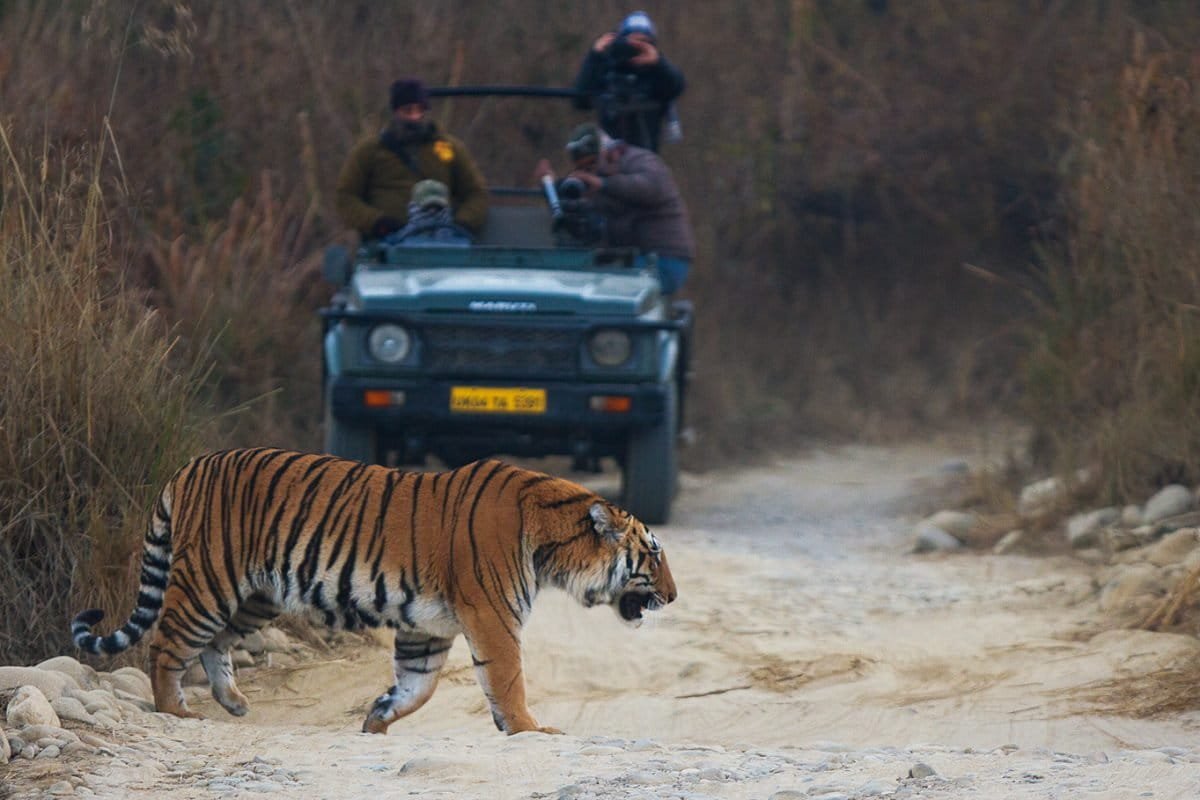
Part of a Broader Pattern
This isn’t the first recent decision involving Kaziranga’s protective boundaries to draw scrutiny from conservationists. In June 2025, Assam cancelled the preliminary notification for what would have been the ninth addition to Kaziranga National Park and Tiger Reserve, a proposed 2,570-hectare expansion in Sonitpur district’s Tezpur Revenue Circle that had originally been notified back in September 2020. That cancellation was similarly criticised by conservationists, who argued the proposed addition was important for maintaining broader ecological connectivity across the landscape.
Taken together, both decisions reflect a consistent tension in how Assam’s government is currently approaching Kaziranga’s surrounding landscape, prioritising development flexibility in areas bordering the park, even as conservationists argue that flexibility comes at a direct cost to the buffer and corridor systems the park’s wildlife actively depends on.
A Debate That Reached Prominent Public Voices
The proposal has drawn public criticism beyond conservation circles specifically. Industrialist Harsh Goenka was among those who publicly weighed in, pointing out the apparent contradiction between the stated development rationale, easing constraints for projects like a stadium, and the ecological reality that monsoon floods force elephants and rhinos through these very corridor areas each year. His response captured the sentiment driving much of the pushback: that stadiums and civic infrastructure could, in principle, be built elsewhere, but a landscape as ecologically unique as Kaziranga cannot simply be recreated once its surrounding buffer is diminished.
What Happens Next
With Assam’s government indicating it plans to submit its formal proposal to the Centre within the coming two months, the coming period is likely to see intensified debate between the state’s development priorities for the Bokakhat area and the conservation concerns raised by wildlife experts, environmental researchers, and public commentators alike.
For a park globally recognised for hosting the world’s largest population of the greater one-horned rhinoceros, alongside tigers, elephants, and numerous other rare species, and carrying UNESCO World Heritage status, the outcome of this proposal is likely to be watched closely, not just within Assam, but by conservation stakeholders across India who see Kaziranga’s eco-sensitive zone debate as a bellwether for how other protected areas nationwide might navigate the same tension between local development needs and long-term ecological protection.
Pets News Network is India’s first dedicated media platform for the pet and animal industry. For breaking global pet news, brand coverage, and advertising enquiries, contact: ankur@petsnewsnetwork.com


