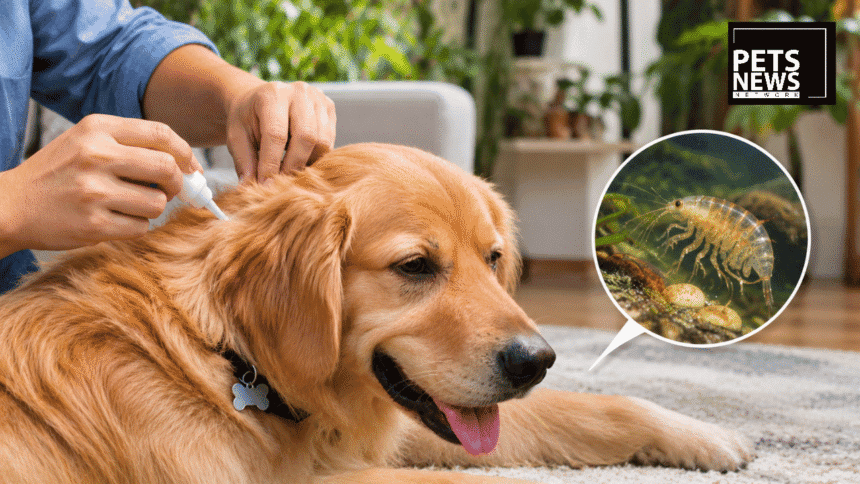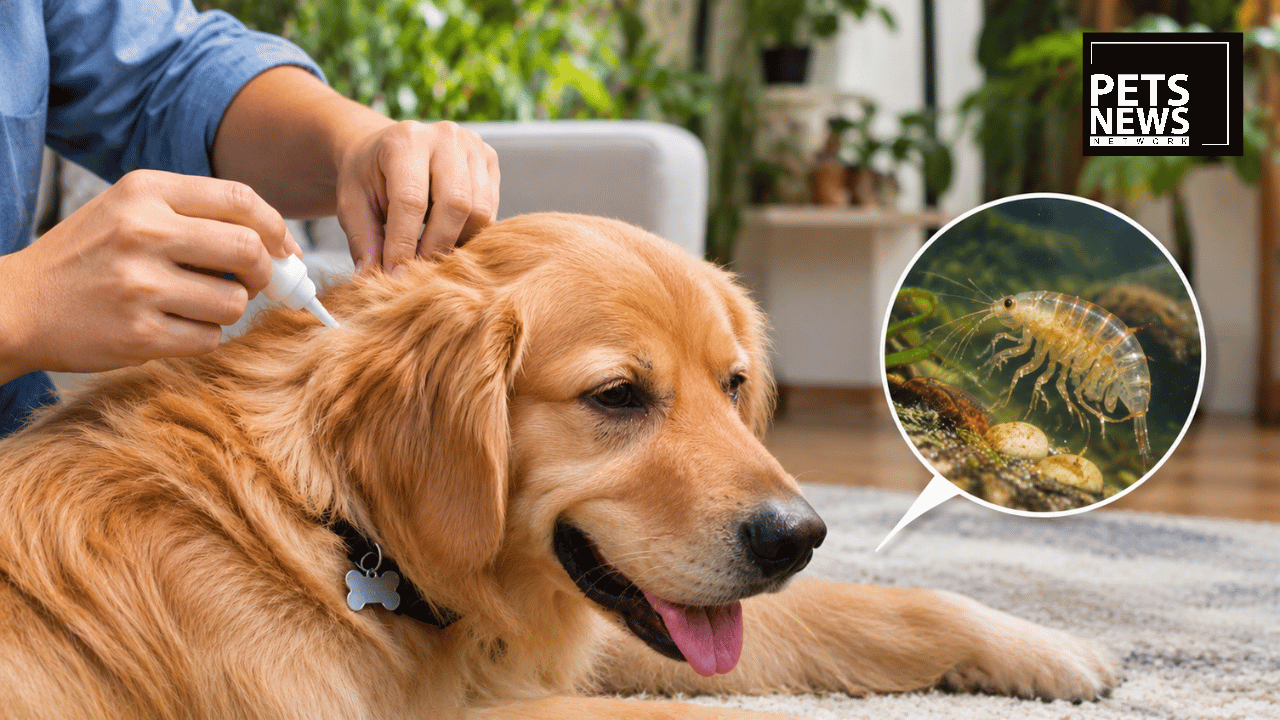

The debate over flea and tick treatments in the UK has moved a step. The government has replied to a House of Lords committee that warned the chemicals in common spot-on products are reaching rivers and harming freshwater life. Ministers accepted some of the committee’s recommendations, turned down others, and left the most consequential one open: whether these products should go on being sold off the shelf without advice. For pet owners anywhere, the argument is a useful guide to using the products with more care.
The short version
| Recommendation | Government’s answer |
|---|---|
| Publish sales data for these products | Accepted, where the law allows, in aggregated and anonymised form |
| Introduce deeper environmental risk assessments | Accepted |
| Better training and advice for those who supply the products | Supported |
| Review how the regulator, the industry and international bodies work together | Accepted; it said it found no evidence of regulatory capture |
| Strengthen the evidence on contamination; fund research | Supported, with partial support on funding |
| Extend the no-swimming, no-bathing period after treatment from 4 days to 28 | Rejected |
| Print restrictions on the pack, not only behind a QR code | Rejected; labelling stays as it is for now |
| End general sale; supply only with advice | Not decided |
Overall, the government accepted most of the committee’s findings but proposed no change to the law for now.
How this started
Two insecticides are at the centre of the question: fipronil and imidacloprid. Both are widely used in spot-on treatments, sprays and collars for dogs and cats. Both are highly toxic to insects, which is why they work on fleas, and both are also highly toxic to the small invertebrates that rivers depend on.
Their use on crops outdoors has been heavily restricted in the UK and Europe on environmental grounds. Their use on pets falls under a separate legal framework, for veterinary medicines, and has continued.
| When | What happened |
|---|---|
| 16 April 2026 | The Veterinary Medicines Directorate (VMD), the UK regulator, opens a call for evidence on whether these products should go on being sold without professional advice |
| 11 June 2026 | The call closes, with 1,131 submissions |
| 5 August 2026 | The Lords Environment and Climate Change Committee publishes its report and recommendations |
| October 2026 | The government replies |
The committee’s recommendations are set out in our earlier report on the Lords inquiry.

How a spot-on reaches a river
The route is ordinary, which is what makes it hard to control. A spot-on spreads through the oils of the animal’s skin and coat. From there it can leave by several paths:
- Swimming. A treated dog that goes into a stream or pond sheds some of the chemical directly into the water.
- Bathing. Washing a treated animal sends the residue down the drain.
- Hands, bedding and laundry. Stroking a treated pet and then washing hands, or washing its bedding, does the same.
Water from drains goes to sewage works, which were not built to remove these compounds, and then to rivers.
Sampling of English rivers has repeatedly found both chemicals. A widely cited analysis published in 2021 detected fipronil in almost every sample examined and imidacloprid in about two-thirds, often at levels above those considered safe for aquatic life.
What the government accepted
Sales data. The government agreed to greater transparency on sales and usage, with aggregated, anonymised figures published where that is legally possible. It added a caution: sales alone do not show how much product is actually applied to animals, or how.
Deeper environmental assessment. At present, medicines for pets are generally treated as low-risk to the environment, on the reasoning that each animal receives a small dose. The government agreed that risk assessments for current and new products should be improved. There is no agreed method yet for doing this for pet products.
Training and advice. It supports better training for those who sell and supply the products.
Governance. It agreed to review the governance arrangements between the regulator and the pharmaceutical industry. It said it had found no evidence that the regulator had been captured by the industry it oversees.
Evidence. It supports building a broader evidence base on contamination, and gave partial backing to funding research.
What it rejected
A 28-day water restriction. Product instructions currently tell owners to keep treated animals out of water for a few days. The committee wanted that extended from four days to twenty-eight. The government declined, calling it “not an appropriate or proportionate regulatory response at this time.”
On-pack warnings. The committee wanted restrictions made clearly visible on the packaging itself, not placed behind a QR code that many buyers will never scan. According to the committee’s chair, the government declined that too. Labelling is unchanged for now.
Both rejections concern the point at which an owner actually handles the product, which is where behaviour could most easily change.
What is still undecided
The largest question has not been answered.
In the UK, many flea and tick treatments can be bought from a supermarket shelf or an online shop with no advice at all. The committee recommended ending that, so the products would be supplied only where a vet, pharmacist or other qualified person can advise on whether treatment is needed and how to use it.
The VMD is reviewing exactly this for products containing fipronil and imidacloprid, and the government has said it will wait for that review before considering any change. The regulator’s summary of the 1,131 responses was delayed to the autumn because of the volume received. Until the review concludes, sales continue as before.
No product has been taken off sale, and none has had its legal supply category changed.
The stakes are real on both sides. Restricting sales would affect retailers and could raise the cost and effort of treatment for owners. However, leaving things as they are keeps the products easy to buy and easy to overuse.

Why this matters outside the UK
The same two chemicals are sold for pets around the world, and dogs swim and get bathed everywhere. The UK is among the countries that have measured the result and begun to argue about it.
The underlying issue is routine use. In many places, monthly treatment all year round has become the default, whether or not a particular animal is at risk. Much of the debate in Britain is about moving from “treat every month” to “treat when it is needed”.
What a pet owner can do now
None of this is a reason to stop protecting animals from fleas and ticks. Infestations cause real suffering and spread disease. It is a reason to use the products with more thought.
- Ask whether your pet needs treatment year-round. Risk depends on where you live, the season, and how your animal lives. A vet can advise.
- Read the full instructions, including anything behind a QR code. The water restriction is there for a reason.
- Keep a treated dog out of rivers, ponds and the sea for at least the period on the label, and longer if you can.
- Do not bathe a pet soon after a spot-on. It wastes the treatment and sends it down the drain.
- Apply the correct dose for the animal’s weight. More is not better.
- Never use a dog product on a cat. Some dog treatments are dangerous to cats.
- Ask about alternatives, such as tablets, if your dog swims often. No option is free of trade-offs, and the choice is one to make with a vet.
- Wash bedding and vacuum regularly. Most of a flea’s life cycle happens in the home, not on the animal.
- Dispose of used pipettes and packaging in household waste, not down the sink or toilet.
Where this stands
- The UK government has accepted tougher environmental assessment, publication of sales data and better training.
- It has rejected a 28-day water restriction and mandatory on-pack warnings.
- It has not decided whether flea and tick products should remain on general sale.
- The regulator’s review of supply routes is where that decision will be made.
Pets News Network is India’s first dedicated media platform for the pet and animal industry. This article is general information, not veterinary advice. For breaking global pet news, brand coverage, and advertising enquiries, contact: info@petsnewsnetwork.com