
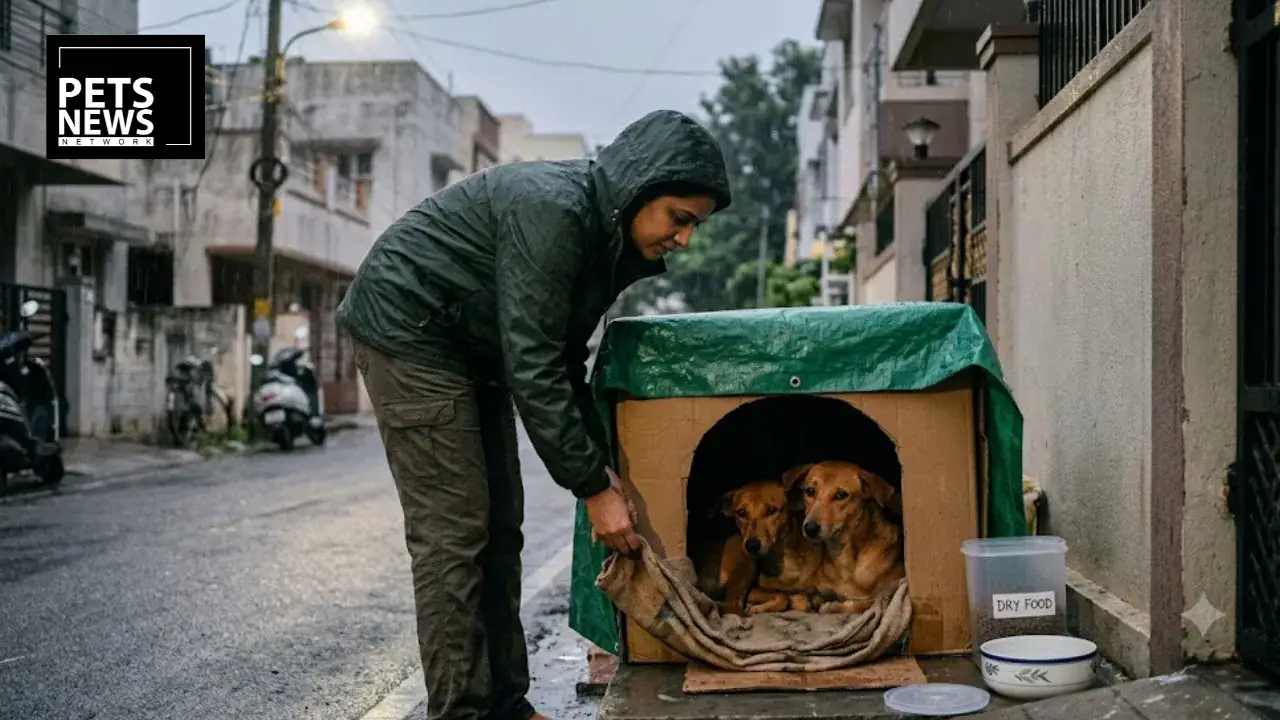

Every monsoon season in Bengaluru brings the same quiet, urgent challenge for the city’s animal welfare volunteers: keeping community dogs safe, dry, and healthy through months of heavy rain, flooded streets, and the disease risks that come with standing water. Unlike owned pets who retreat indoors at the first sign of a downpour, street dogs have to weather the season out in the open, making volunteer-run shelter, feeding, and first-aid networks genuinely life-saving during these months.
Across the city, dedicated groups and individual caregivers have developed a surprisingly practical, low-cost playbook for monsoon dog care, one built on accessible materials, careful monitoring, and a clear understanding of what genuinely helps versus what can inadvertently cause harm.
Building Shelter on a Budget
For most volunteers, the first and most urgent priority when monsoon arrives is shelter, and the solutions being used across Bengaluru are refreshingly low-tech and affordable.
The cardboard shelter box. A sturdy cardboard box with a small entrance cut into one side, fully lined inside with plastic sheeting or tarpaulin to keep out moisture, forms the backbone of individual dog shelters across the city. These boxes are typically placed in elevated or naturally sheltered spots, tucked under staircases, building awnings, or similar covered areas, and cost under ₹500 to put together, making them accessible even for individual caregivers without institutional backing.
Larger colony shelters. For dogs living in groups or established colonies, volunteers often construct bigger structures using tarps or old blankets and banners strung up between existing supports, walls, poles, fences, whatever’s available nearby. These larger setups can shelter multiple dogs at once and tend to be maintained collectively by neighbourhood volunteer groups rather than a single individual.
Why Monitoring Matters as Much as the Shelter Itself
Building a shelter is only half the equation. Local groups such as Cubbon Park Canines and CJ Memorial Trust have developed systematic tracking practices to monitor individual dogs’ shelter usage throughout the season, a step that might seem excessive at first glance but proves genuinely important during monsoon months.
By keeping tabs on which dogs are regularly using which shelters, these groups are able to notice when a dog goes missing within roughly 24 hours, a critical window for locating an animal that may have wandered off, gotten injured, or become trapped somewhere during heavy rain, rather than only realising something’s wrong days later.
Volunteers have also increasingly turned to reflective collars for community dogs during monsoon season specifically. With reduced visibility during heavy rain and dogs sometimes moving to unfamiliar spots seeking shelter, reflective collars significantly reduce the risk of nighttime road accidents, helping drivers spot dogs on the road well before it’s too late to react.
Getting Feeding Right During the Rainy Season
Feeding practices shift meaningfully during monsoon, both in terms of what’s given and how it’s stored.
What works well. Dry kibble and plain biscuits remain reliable staples, provided they’re stored in airtight containers to prevent moisture damage and spoilage during humid conditions. For a more substantial meal, bland boiled rice mixed with unseasoned chicken or egg offers a nutritious, easily digestible option that holds up well even in wet weather.
What to avoid entirely. Milk is a common instinct for people wanting to feed strays, but it’s actively discouraged by experienced caregivers, since lactose intolerance is widespread among dogs and can trigger digestive upset. For puppies specifically needing a milk-like supplement, diluted curd offers a gentler, more digestible alternative.
Why clean water matters more than people realise. One of the most overlooked monsoon risks isn’t the rain itself, it’s what the rain leaves behind. Stagnant puddles that collect after heavy rainfall carry a genuinely serious risk: leptospirosis, a bacterial infection that can be fatal if left untreated, and one that spreads easily through contaminated standing water. Providing clean, covered water bowls for community dogs isn’t just a nicety during monsoon season, it’s a direct, meaningful way to reduce a real disease risk that intensifies specifically because of the rains.
What Belongs in a Simple Field First-Aid Kit
Beyond shelter and food, monsoon season brings a higher likelihood of minor wounds, infections, and parasite issues among community dogs, making a well-stocked, accessible first-aid kit genuinely valuable for volunteers working in the field.
For wound cleaning, povidone-iodine solutions such as Betadine or Cipladine are the preferred choice among experienced caregivers, specifically because they’re gentler on canine skin compared to spirit or Dettol, both of which can sting and irritate a dog’s wound, making the animal more resistant to treatment.
For protection against infection, antiseptic powders help keep damp wounds dry, a genuinely important detail during a season when everything, including open wounds, struggles to stay dry naturally. Herbal fly-repellent ointments, such as Himax, are also commonly used to prevent maggot infestations, which can develop in untreated wounds within as little as 48 hours during monsoon’s warm, humid conditions.
For tick removal, volunteers rely on fine-toothed combs or blunt tweezers to carefully remove ticks as close to the skin as possible, reducing the risk of tick-borne illnesses like tick fever or ehrlichiosis. Removed ticks should always be dropped into soapy water for disposal, never crushed by hand, since crushing a tick can release infectious material and increase exposure risk.
Essential gear rounds out a practical field kit: a soft muzzle for handling frightened or injured dogs safely, gloves for hygienic handling, a flashlight for low-visibility conditions, and a saved list of local rescue contact numbers, including organisations like Sarvoham Animal Foundation and Charlie’s Animal Rescue Centre, for situations that go beyond basic first aid.
The One Rule Every Volunteer Follows Strictly
Perhaps the most important guideline among experienced community dog caregivers isn’t about what to do, it’s about what not to do. Volunteers are strongly cautioned against administering prescription medications, dewormers, or antibiotics without veterinary supervision. Dosing based on a guessed body weight, without a professional assessment, can be genuinely dangerous, potentially causing harm rather than helping the animal recover.
Certain warning signs are treated as an immediate signal to seek professional veterinary intervention rather than attempting further field treatment: pale gums, heavy or laboured breathing, and foul-smelling wounds are all considered red flags requiring urgent, qualified medical attention rather than continued at-home care.
Why This Grassroots System Works
What makes Bengaluru’s monsoon care network for community dogs genuinely effective isn’t expensive infrastructure or institutional funding, it’s a combination of low-cost, practical solutions and consistent, community-driven monitoring. A ₹500 cardboard shelter, a covered water bowl, and a volunteer who checks in regularly can make a measurable difference in a community dog’s ability to survive monsoon season safely.
For residents in Bengaluru and other Indian cities looking to support community dogs during the rainy months, the model offers a clear, low-barrier starting point: build or contribute toward simple shelters, provide clean water and appropriate food, learn basic wound and tick care, and know when a situation genuinely calls for a vet rather than a first-aid kit. It’s a system built not on grand gestures, but on consistent, informed care, exactly the kind that gets community dogs through monsoon season safely, one rainy night at a time.
Pets News Network is India’s first dedicated media platform for the pet and animal industry. For breaking global pet news, brand coverage, and advertising enquiries, contact: ankur@petsnewsnetwork.com


