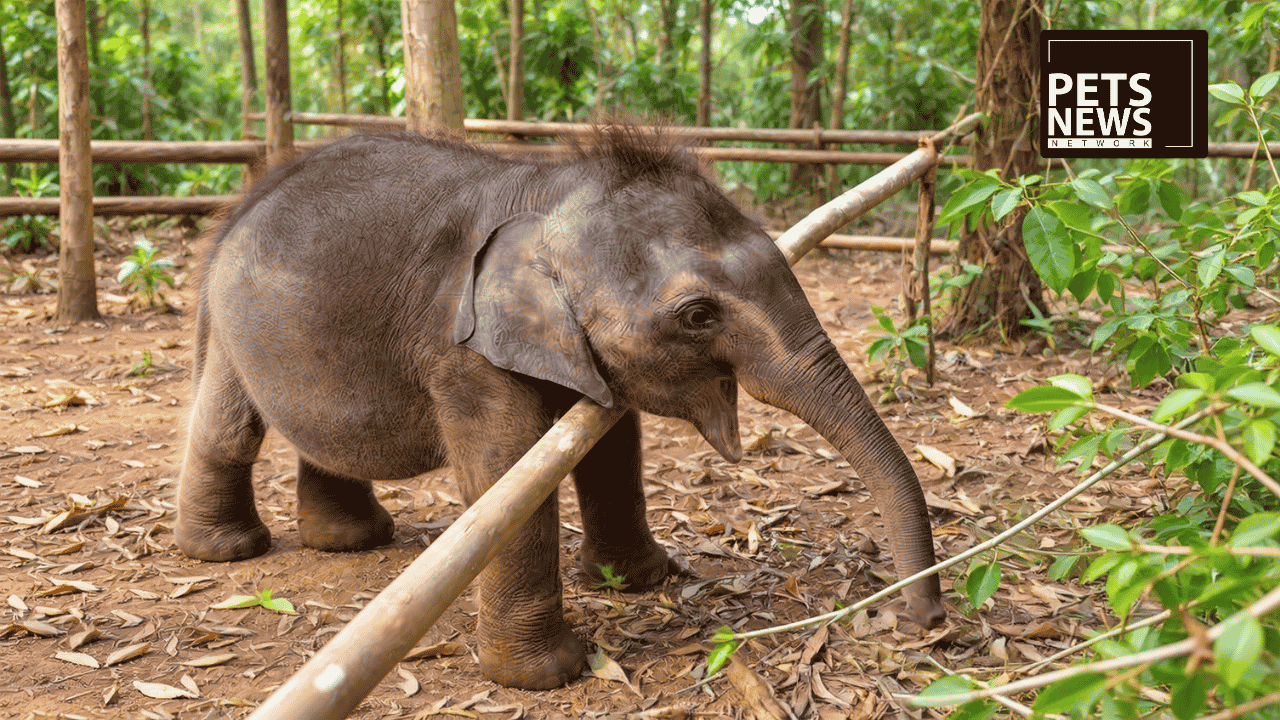

An eighteen-month-old Maya elephant calf cannot stand. She has fractures in both front legs, extremely brittle bones, a chest infection, and pressure sores. On 29 October, a medical board in Kerala recommended euthanasia. However, on 6 November, rescuers flew her to Gujarat on life support instead. A single unconfirmed medical possibility triggered this change, and the veterinarians who raised it have links to the centre now treating her.
How the Maya elephant calf got here
| Date | What was reported |
|---|---|
| 19 April 2025 | Found abandoned near Kaprikkad, Malayattoor Forest Division, as a newborn who could not suckle, after her herd crossed a river without her |
| Since then | Hand-reared at Abhayaranyam, the Kerala Forest Department’s facility at Kodanad |
| 2 July 2026 | Slipped while playing and injured her right shoulder. Her condition worsened despite treatment, physiotherapy, splints and supplements |
| 24 October | A veterinary examination found a fractured left humerus, multiple fractures in the right forelimb, generalised bone thinning, a chest infection and pressure sores. The vet rated her prognosis “guarded to grave” |
| 29 October | A medical board found her bones extremely brittle, possibly due to a congenital defect, and recommended euthanasia |
| 1 November | Vantara’s veterinary team reviewed her records, X-rays and blood work in a video consultation |
| 4 November | The Chief Wildlife Warden convened the medical board with an outside elephant veterinarian |
| 5 November | Kerala’s Chief Wildlife Warden, Dr P Pugazhendi, IFS, issued the transfer order |
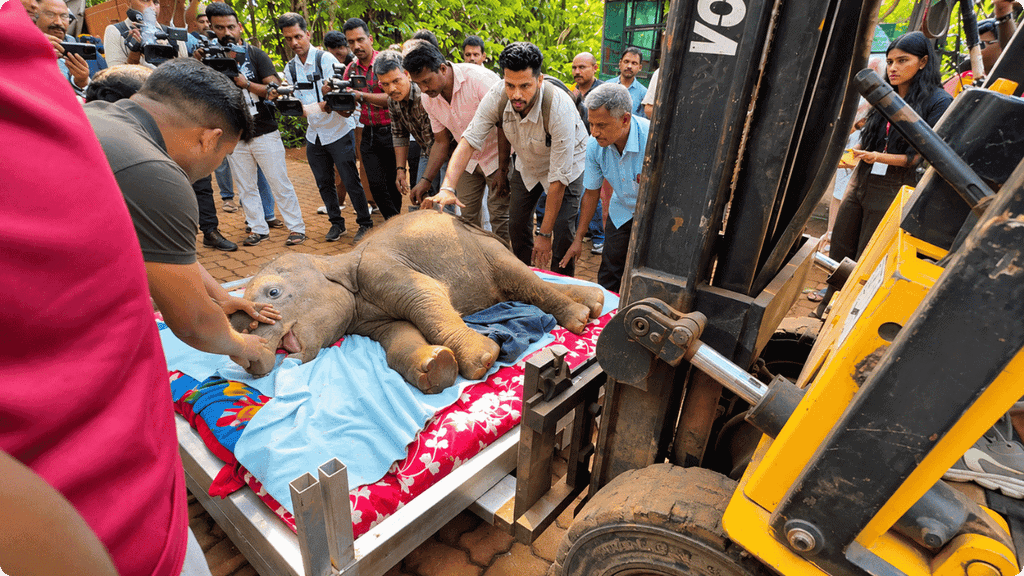
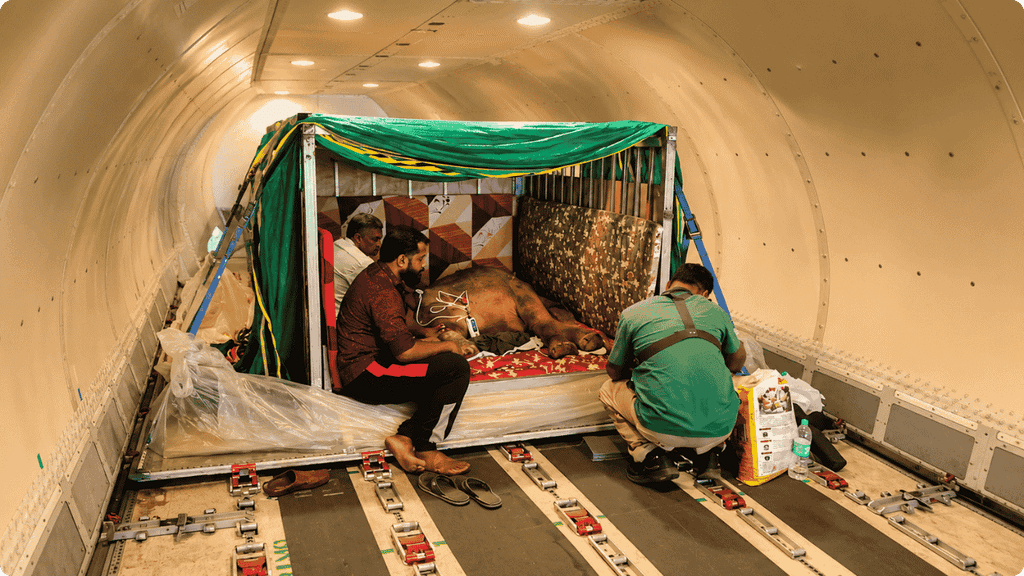
| 6 November | Flown from Kochi to Vantara in Jamnagar, Gujarat, on life support |
The decision that was nearly taken
By late October, doctors judged Maya’s prognosis grave enough to formally recommend ending her life. They did not make that call lightly. A calf that cannot stand—with fractures in both forelimbs, a chest infection, and pressure sores—suffers sustained pain with no clear path back to mobility.
Next came a second opinion. Dr Kushal Konwar Sarma, the Padma Shri-honoured elephant veterinarian who advises Vantara, identified a possible parathyroid-related disorder. If accurate, this condition might respond at least partly to treatment. Dr Yaduraj Khadpekar, head veterinarian at Vantara’s Elephant Care Centre, agreed with this assessment.
They did not promise that Maya would recover. Instead, they recommended attempting intensive care before making any irreversible decision. Consequently, the medical board backed the transfer unanimously.
That is the basis of the airlift. Not a cure and not a prognosis, but a possibility that had not yet been excluded.
One detail matters for readers weighing the account. Both veterinarians who raised the parathyroid possibility are associated with Vantara, the centre that has now taken her in.
What happened to the Maya elephant calf on 6 November
Maya left Kochi on a chartered flight at about 1.30 pm, with veterinary examinations before and during the journey. Three Vantara elephant veterinarians, paravets and caregivers travelled with her, along with emergency medicines and life-support equipment. Kerala sent Dr Binoy C Babu, the Assistant Forest Veterinary Officer who has overseen her care, and her familiar caregiver Nikhil Babu.
At Vantara’s intensive hospitalisation facility in Jamnagar, which Anant Ambani established, she is to receive round-the-clock monitoring, pain management, advanced diagnostics, hydraulic lifting support to take weight off the fractured limbs, and hydrotherapy where clinically appropriate. Kerala’s Chief Wildlife Warden said the plan also involves hormonal therapy, with initial treatment expected to last four to six months.
Vivaan Karani, Vantara’s chief executive, said: “Maya has fought for every single day of her life. Now it is our turn to fight for her.”
Who is responsible for what
Kerala ordered the transfer and says it keeps oversight. The state’s Chief Wildlife Warden issued the order. A Kerala monitoring committee, chaired by the Conservator of Forests, Social Forestry, Central Region, will review her progress, and reports say it will receive updates at least weekly. Her own caregiver remains with her. Officials say she will return to Abhayaranyam once she is well enough, and that Vantara will help with that return.
Vantara is providing the aircraft arrangements, the facility and the specialist equipment. Reports say it will also cover the cost of her treatment. Few institutions in India could have supplied that at a few days’ notice. Both things are true at once: the state remains the authority responsible for Maya, and a private centre is carrying out the treatment.
The diagnosis is not a diagnosis yet
The language around this case has already begun to firm up in the retelling, so it is worth being precise.
No confirmed diagnosis has been published. What exists is a possible parathyroid-related disorder, raised by two veterinarians, which may or may not prove correct and may or may not respond to treatment. Kerala’s Chief Wildlife Warden has separately described a bone condition called osteopenia and referred to genetic disorders. The 29 October medical board raised a possible congenital defect. Those descriptions are not the same as a confirmed cause.
Her prognosis remains uncertain. That is the language used by those closest to the case, and it should be the language used in reporting it.
What is still unknown
Several questions remain open, and none has a published answer.
- The cause of the weak bones. Officials and veterinarians have offered different possibilities, including a congenital or genetic defect and a parathyroid disorder.
- Whether diet played any role. Veterinary literature links metabolic bone disease in hand-reared young animals to calcium and phosphorus balance in their feed. Nothing published says that applies to Maya, and PNN is not suggesting her care was anything but sound.
- What the tests at Jamnagar find. Advanced diagnostics there may confirm or rule out the parathyroid possibility.
Rearing orphaned elephant calves is something India does regularly, so whatever the answer turns out to be may matter beyond one animal. For now, it is a question and not a finding.
What happens now
Maya is now receiving treatment in Jamnagar, with her caregivers beside her and a Kerala monitoring committee overseeing the case. If she stabilises and responds to treatment, officials plan to bring her home to Abhayaranyam. Otherwise, the medical board may revisit the decision it set aside on 29 October.
Ultimately, that is the honest shape of this story. Teams have given a calf—once recommended for euthanasia—another chance at considerable effort and expense, based on one unconfirmed possibility. This attempt may work, or it may fail.
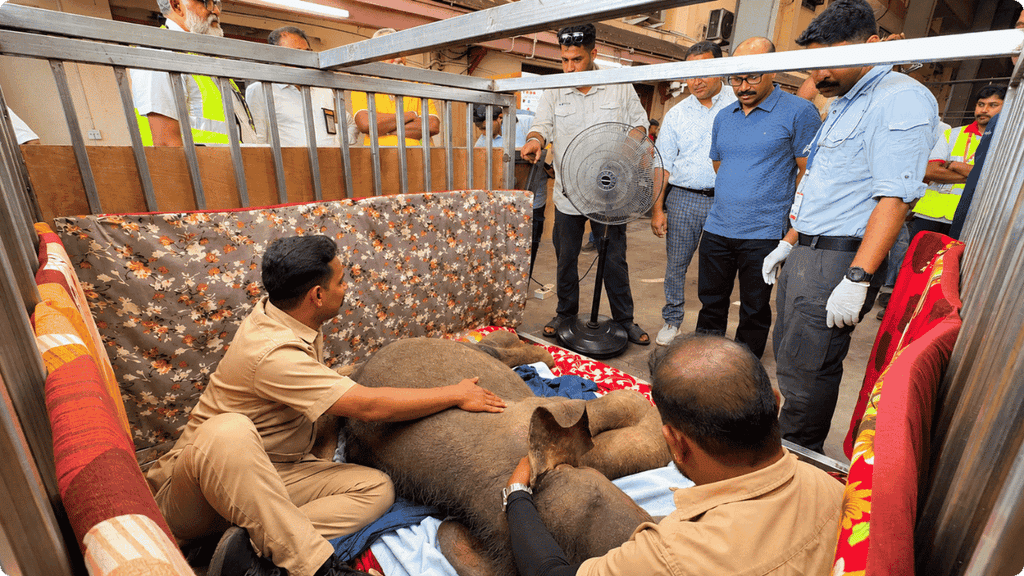
What is not in doubt is that an eighteen-month-old animal has spent her entire life being kept alive by people, and is still fighting.
Pets News Network is India’s first dedicated media platform for the pet and animal industry. For breaking global pet news, brand coverage, and advertising enquiries, contact: info@petsnewsnetwork.com