
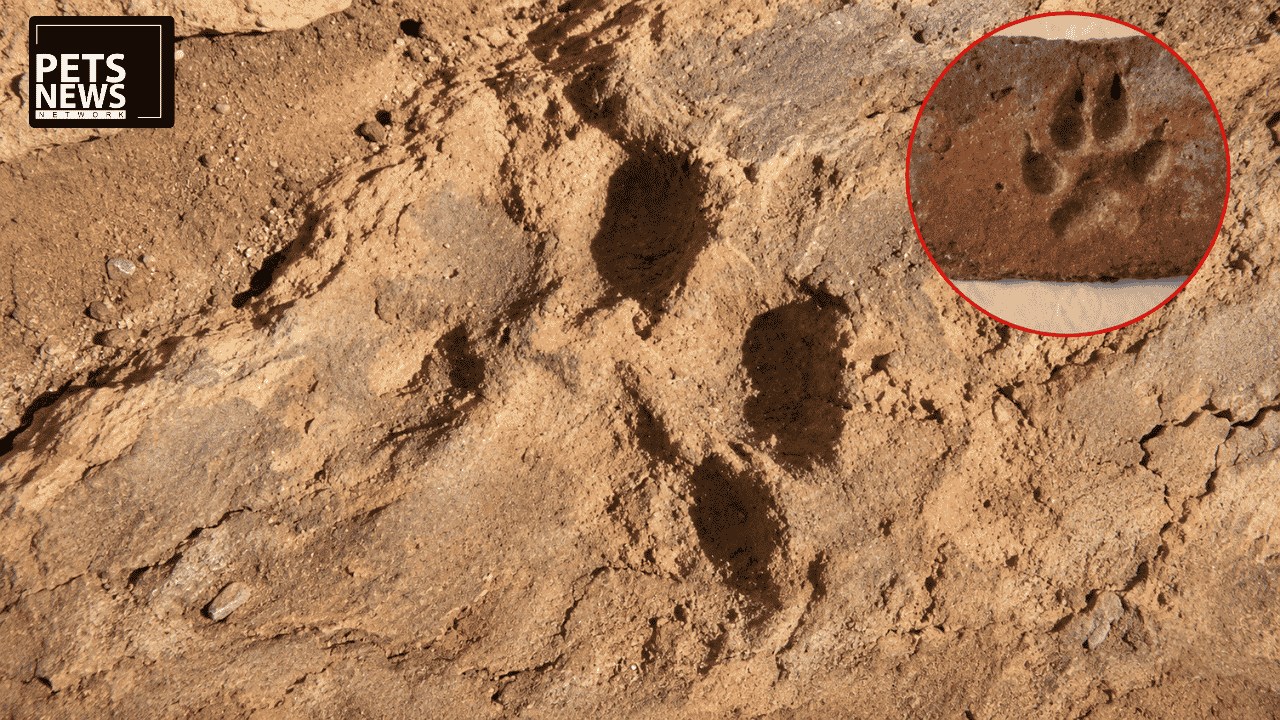

In western Türkiye (Turkey), archaeologists have pulled a mudbrick out of the rubble of a house that burned down about 4,000 years ago. Pressed into its surface is a 4000-year-old dog paw print, left by an animal that walked across the clay while it was still wet. It is an easy find to romanticise, and the archaeologist who runs the excavation has pointedly declined to. His caution is the most interesting thing about it.
What was found
| Detail | What has been reported |
|---|---|
| Site | Tavşanlı Höyük (Tavsanli Hoyuk), Kütahya province, western Türkiye |
| Excavation director | Prof Erkan Fidan of Bilecik Şeyh Edebali University, leading digs here since 2021 |
| The object | A mudbrick from a Bronze Age house, described as roughly 4,000 years old |
| Announced | In late October 2026, by Türkiye’s Culture and Tourism Minister Mehmet Nuri Ersoy |
| Site scale | A mound of about 45 hectares, one of the largest Bronze Age settlements in western Anatolia, with occupation going back around 8,000 years |
Ersoy said the prints preserved “a small moment from everyday life 4,000 years ago.”
Why a footprint in mud survives four millennia
The answer is counter-intuitive: the print survived because the building was destroyed.
Mudbrick is not a durable material. Builders press soil, water and straw into a mould and leave it in the open air to dry in the sun. Left alone, it eventually returns to being soil, so most Bronze Age mudbrick is long gone.
While the bricks lay drying, however, there was a window when the surface was soft enough to take an impression and firm enough to keep it. An animal walked across one during that window. The brick then finished drying with the print in it, and builders put it into a wall.
Then the house burned. The fire worked like a kiln. It baked the raw brick hard, turning something that would have dissolved into something closer to ceramic. The wall then collapsed, and the debris sealed the brick away from weather, water and farming for four thousand years.
Nothing about this was deliberate. A destruction event is the only reason there is anything to look at.
How do we know it was a dog?
The public record does not explain. Reports say only that the prints were identified as a dog’s. No measurements have been published, no comparison method has been described, and no zooarchaeologist has been named.
That matters more than it sounds. Wolves and golden jackals live in the region as well as dogs, and canid tracks are hard to separate by eye. All of them leave four-toed prints of broadly similar shape. Telling them apart normally takes measurements, stride data and comparison with reference specimens.
What the excavation director actually said
Here is the line that many versions of this story leave out. Speaking to a science news outlet, Fidan said:
“Of course, we cannot determine whether this particular dog was kept as a pet in the modern sense.”
That sentence does real work. It does not say the animal was wild, and it does not say it was unloved. It says the evidence does not reach that question, which is the correct thing for an archaeologist to say about a footprint.
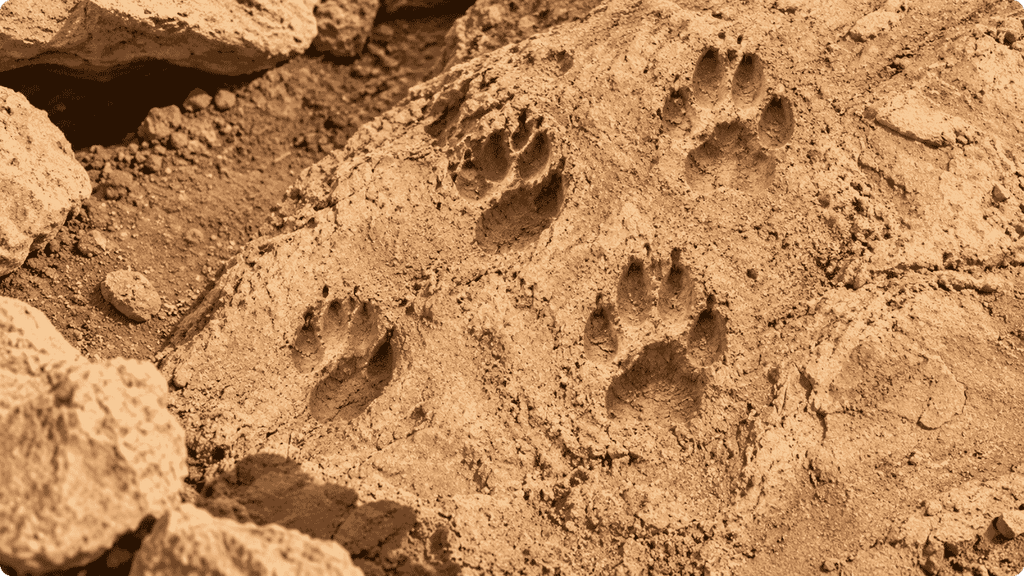
A paw print establishes presence. It shows that an animal was close enough to a settlement to wander through a yard where bricks were drying. It does not establish ownership, affection, domestication or a household. Those are inferences, and readers should treat them as inferences rather than findings.
What we know about dogs in Anatolia
The print cannot tell you about the animal that made it. The region around it, though, is one of the best-documented places in the world for the early history of dogs, and that record changed this year.
In March 2026, two papers in Nature reported findings from excavations in Türkiye led by the University of Liverpool with the British Institute at Ankara, alongside ancient-DNA and isotope teams from several institutions.
| Site | Finding |
|---|---|
| Pınarbaşı, central Anatolia | Dog puppies buried by people around 15,800 years ago, the earliest dogs confirmed directly by nuclear DNA |
| Pınarbaşı, isotope analysis | The dogs ate fish, a major part of the human diet at the site |
| Boncuklu, about 30 km away | By around 9000 BC, dogs were buried directly with people |
Professor Douglas Baird of the University of Liverpool, who leads the excavations, described the dogs as close companions of people who received ritual treatment similar to humans. Dr William Marsh of the Natural History Museum, a co-first author, said the work showed dogs were already widely dispersed across Europe and Türkiye by at least 14,000 years ago. The studies also found that Anatolian-derived dogs later spread west with the first farmers.
Hold that against the brick. By the time someone in Kütahya laid out mudbricks to dry, people and dogs in Anatolia had lived together for something close to twelve thousand years. That proves nothing about the animal in the brickyard. It does mean the surprise would be its absence, not its presence.
What is still missing
Four gaps are worth noting before anyone treats this as settled.
- How many prints. Some reports describe a single print on one brick, while others say “paw prints”. No count has been published.
- No measurements. There is no published size, spacing or depth.
- No dating method. The brick is described as “about 4,000 years old”, and at least one report puts the debris closer to 3,700 years. Archaeologists have linked the site’s large destruction layer to an attack around 1700 BCE, so the figure is probably rounded. No radiocarbon date has been given for this brick.
- No peer-reviewed publication. This is a ministry announcement and press coverage, not a paper.
Animal prints in building material are not rare
Context helps here, and it does not diminish the find. Animal tracks in ancient building materials are a recognised category of archaeological evidence. Roman roof tiles bearing dog and cat prints turn up regularly across the former empire for the same reason: workers laid tiles out to dry in open yards, and animals walked through them.
What makes this example notable is its age, and the fire that preserved it. A print in a Roman tile is roughly two thousand years old. This one may be about twice that.
The site has produced stranger things
The paw print is the find that travelled, but it is not the most remarkable thing Tavşanlı Höyük has given up. Excavators have recovered the remains of two people from burned buildings, a teenager and a middle-aged man, with brain and skin tissue preserved through carbonisation. The team has also reported a Bronze Age cylinder seal.
People lived on the mound for roughly eight thousand years. The paw print is one afternoon out of that.
What it actually tells us
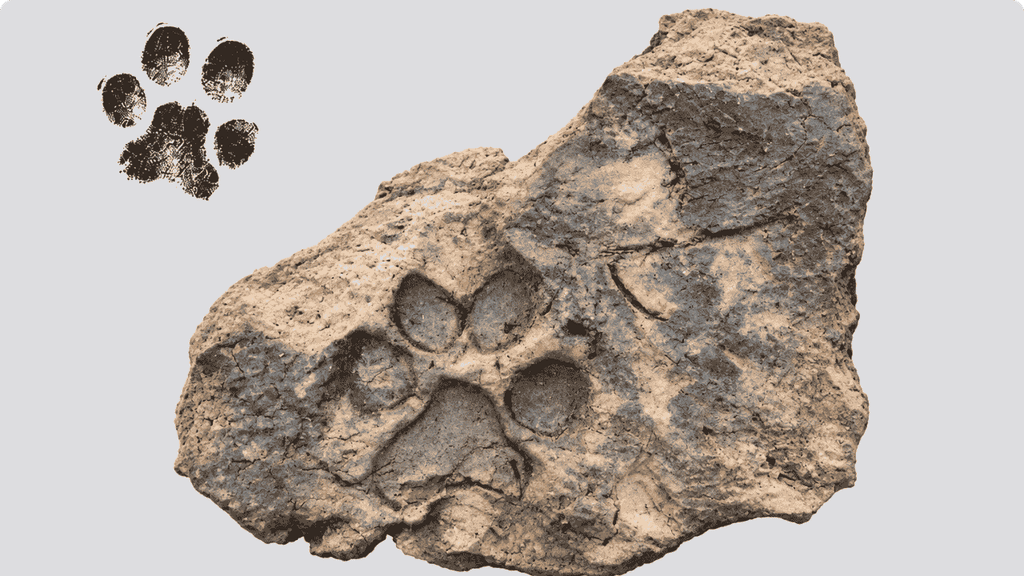
Strip away the framing and what remains is still worth having. Four thousand years ago, in a brickyard beside a settlement in western Anatolia, an animal walked where people were working. It came close enough to human activity that its track ended up inside somebody’s wall. Nobody picked the brick out. Then the house burned, and the accident was preserved.
That is a smaller claim than “ancient pet”, and it is a more honest one. Set beside the Anatolian record, however, it is not a thin one. Puppies were buried by people nearly twelve thousand years before this brick was made, and dogs were laid in human graves.
A footprint cannot tell you whether that animal had a name. What the ground around it says is that by then, in that part of the world, it very probably did.
Pets News Network is India’s first dedicated media platform for the pet and animal industry. Details of the find come from news reports of a ministry announcement and have not been peer reviewed. For breaking global pet news, brand coverage, and advertising enquiries, contact: info@petsnewsnetwork.com