
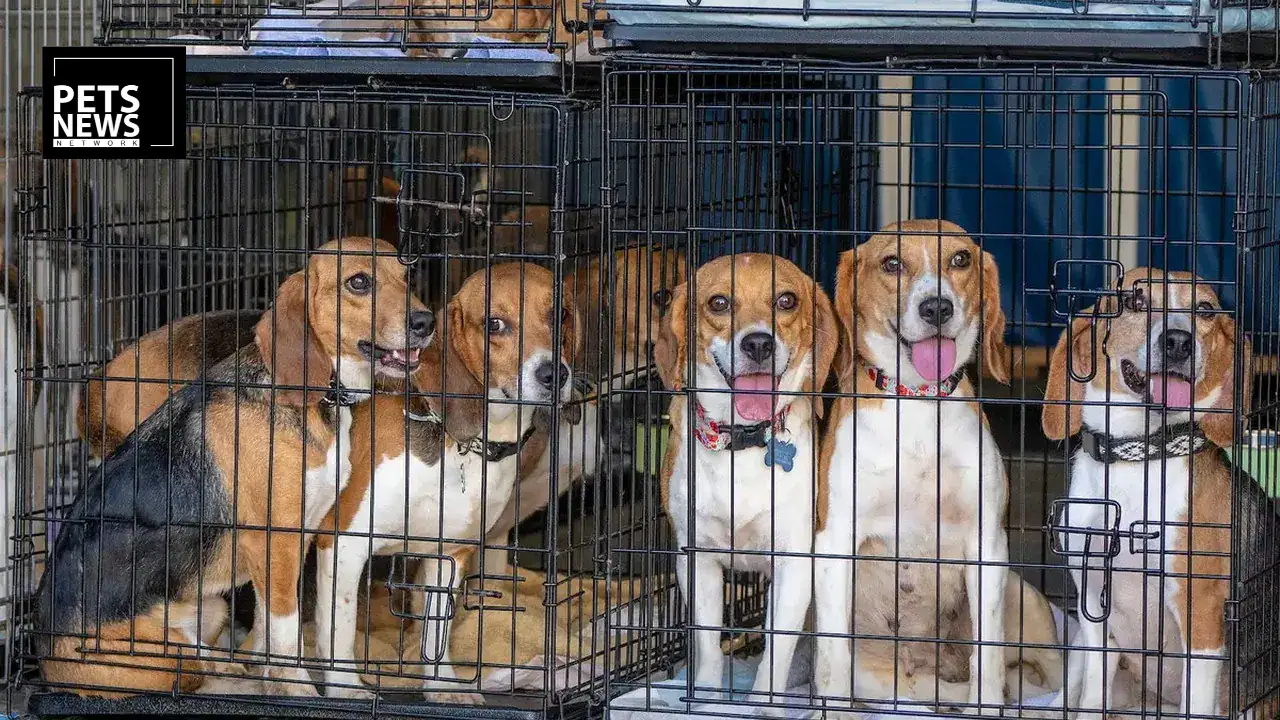

A years-long saga involving thousands of beagles bred for laboratory research has reached its conclusion, but not without exposing troubling gaps in how the United States regulates animal breeding facilities.
The final group of 155 beagles from Ridglan Farms, a Wisconsin facility that bred dogs specifically for biomedical research, has now been relocated to a rescue organisation in Florida. That handoff marks the end of a months-long effort that has seen more than 2,000 dogs released from the facility this year alone.
A Rescue Effort Years in the Making
The dogs’ new home is Big Dog Ranch Rescue, whose founder Lauree Simmons worked alongside multiple rescue groups to negotiate the release of the entire beagle population from Ridglan Farms.
Simmons didn’t hold back on why beagles, specifically, tend to end up in research settings. “They choose beagles because they’re easy to handle and they’re so forgiving. You hurt them one day and they’re going to forgive you the next and let you do it all over again,” she said, calling the practice inhumane. Her commitment to the cause, she added, doesn’t have an expiry date: “For me, it’s never enough until animal cruelty ends. I’ll do this till the day I die.”
The Numbers Behind a Bigger Story
The Ridglan case lands in the middle of a much larger national conversation. Despite growing momentum to reduce animal testing across the U.S., USDA records show more than 37,000 dogs were used in American research last year alone, many sourced from commercial breeding facilities regulated under the federal Animal Welfare Act.
What makes the Ridglan case particularly striking is the disconnect a CBS News investigation uncovered between state and federal findings at the same facility. Wisconsin’s Department of Agriculture, Trade and Consumer Protection investigated Ridglan between 2024 and 2025 and documented 494 violations, several tied directly to how the dogs were being handled.
That investigation carried real legal weight. In January 2025, a Dane County Circuit Court judge found probable cause that Ridglan had committed crimes under Wisconsin’s animal cruelty laws and appointed a special prosecutor to look into the allegations. Ridglan ultimately reached a settlement to avoid criminal prosecution, agreeing to surrender its state license to sell dogs.
Where Federal Oversight Fell Short
Here’s where the story gets uncomfortable for regulators. Federal inspection records tell an almost entirely different story than the state’s findings. Over the past decade, USDA inspectors cited just four violations at Ridglan’s breeding facility and two at its research facility, none of them classified as critical.
Wisconsin Congressman Mark Pocan didn’t mince words about the gap. “To me that doesn’t make any sense,” he told CBS News. “When you have that amount of state violations, clearly that stood out.”
Ridglan, for its part, maintains it did not violate any state or federal laws and points to what it calls a “well documented history of exemplary animal care,” framing the USDA as the authority that ensures research animals are properly cared for under strict federal guidelines.
A Pattern the USDA’s Own Watchdog Has Flagged
This isn’t the first time federal oversight has come under fire. The USDA’s own inspector general has repeatedly raised concerns about how dog breeders are monitored, going back nearly three decades. A 2025 audit specifically found that “inconsistent and untimely inspections may have contributed to the dog breeders’ continued violation of AWA requirements.”
In response, the USDA told CBS News it works with state officials “to maximize enforcement outcomes” and has taken “swift and meaningful steps to strengthen oversight,” including acting on the inspector general’s latest recommendations.
The Bigger Question: Animals in Research
The debate arrives at a moment when the federal government is actively encouraging alternatives to animal testing, though many scientists caution against moving away from it entirely. Former research veterinarian Larry Carbone pointed out that while human cells and tissues are increasingly usable in research, they can’t always replicate how a drug or disease behaves inside a full living body.
“Cancer was mostly a death sentence,” Carbone said. “Now most of us know people who are taking HIV meds or HIV preventions, who are living with cancers or living post-cancer, all from things that were developed using animals.”
For the 2,000-plus beagles now settling into new homes, the science-versus-welfare debate is secondary to a simpler reality: for the first time, they get to just be dogs.
Pets News Network is India’s first dedicated media platform for the pet and animal industry. For breaking global pet news, brand coverage, and advertising enquiries, contact: ankur@petsnewsnetwork.com